Kenya’s reptile atlas: scientists bring referencing into the 21st century:
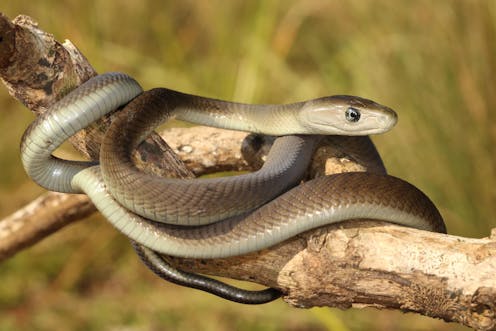
Kenya has over 260 reptile species. Keeping track of them is important because of the important role they play in balancing the natural world’s ecosystems. For instance, the scavenging behaviour of crocodiles keeps, preventing possible disease outbreaks. Reptiles also have socioeconomic value – many of them attract tourism to certain parts of the country such as Nairobi’s Mamba Village or Malindi’s snake park.
But monitoring them isn’t easy due to a lack of up-to-date information. Traditionally, to learn about and track different reptiles, naturalists would use field guide books. At times, checklists of known species (these don’t necessarily have photographs), ranging from local to national scopes, could also be used.
However, these traditional methods are problematic and when it comes to accessing detailed reference information, students and naturalists face serious challenges. These include; the cost of buying books, the risk of accessing out-dated information in a fast changing environment and the inability to decipher scientific publications. The sheer size of some reference books is also a hindrance to a frequent user who is often in the field.
This is no different in Kenya where researchers, naturalists and tourists struggle to access information on reptiles. Take a look at the popular Stephen Spawls Field Guide to the Reptiles of East Africa for example. Since the publication of this volume in 2002, about 20 new species have been discovered and known species have been found to exist in new range areas. However, updating a reference book like this one would take a substantial amount of money and effort.
When it comes to accessing more specific publications on topics like poisonous snakes national and regional species checklists are used, but these are often out of circulation – because volumes are no longer in print – and hard copies are only available in institutional libraries.
Despite Africa’s biological richness, many countries are yet to develop easily retrievable species information. South Africa is one of the few places in Africa that has had good progress, courtesy of a biodiversity portal led by the South African Biodiversity Institute. Access to this kind of information is extremely beneficial for awareness and in implementing suitable conservation strategies. This knowledge can also be applied by policymakers, for example in the field of agriculture with regards to the control of crop pests or weeds. For example snakes are regarded as a fantastic biological control agents, keeping rodent populations in check when they might cause large-scale crop damage.
In light of all this, a group of herpetologists and scientists from the National Museums of Kenya launched a project to bring the country’s referencing system into the 21st Century.
More than 70 million species
Four years ago, we set about creating a website called the Kenya Reptile Atlas which compiles information on Kenya’s reptiles, making it easily accessible to all. To date, at least 50% of Kenya’s 268 reptiles have been documented. Our hope is that this project will emulate the success of sites like the Atlas of Living Australia which has so far aggregated more than 70 million records from multiple sources accessible to the public in a downloadable format.
The Kenya Reptile Atlas offers brief and simple descriptions for each species, shares local names, natural history, conservation issues and the medical significance – for instance, identifying whether a snake species is venomous or not. In each case, a map showing the known occurrence of the species is also provided.
Information in the atlas comes from a range of sources. These include reference books, field guides and field observations that are validated by the authors. It is also interactive as users can email the site’s authors to submit their own observations and receive responses.
It offers some great advantages. For one, field observations ensure that information is kept up-to-date and, secondly, the platform can support multiple photographs – in reference books there’s usually only one image. This gives better, more detailed information in terms of species variation with regards to age, sex or geographical distribution.
Aside from researchers and students, the atlas is beneficial to various groups of society, offering vast amounts of information with ease. Tourists who visit different parts of Kenya are able to use the atlas as a tool for quick identification.
Science teachers also now have a digital resource that they can use which has several images and long text. And the general public, who’ve largely feared and revered reptiles, can use this interactive platform to engage with specialists and learn more about them.
The publication of this online resource has definitely made referencing much easier in Kenya. The long-term impact of this tool will be a possible upsurge in public interest and, hopefully, individuals who will champion the conservation of reptiles. The global assessment of reptiles using the International Union for Conservation of Nature’s Red List criteria is not yet exhaustive, but so far, at least 10 Kenyan species are listed as facing very high risk of extinction. For example, the Pancake tortoise. This is in the vulnerable category based on declining wild populations caused by over-exploitation for the global pet trade and degraded habitats.

Victor Wasonga receives funding from research foundations and agencies e.g. Rufford Foundation for regular research and works as a research scientist at the National Museums of Kenya
Source: The Conversation – Articles (AFRICA)
Read more on The Conversation.
Join the fun: Add Your event | Submit a Press Release | Add your listing.


