African literary prizes are contested — but writers’ groups are reshaping them:

Literary prizes do more than offer recognition and cash to writers and help readers decide what book to choose. They shape the literary canon, a country’s body of highly regarded writing. They help shape what the future classics might be.
But what if Africa’s biggest prizes are awarded by foreign territories; former colonial masters? Or what if African-born writers in the diaspora are routinely chosen as winners over writers living and working in Africa?
Debates have been raging over these issues in recent years, especially relating to the lucrative Caine Prize for African Writing.
The words ‘award’ or ‘prize’ imply that there was a selection process and the best emerged as winner. The awarding of value to a text through the literary prize industry involves selection and exclusion in which some texts and authors are foregrounded, becoming the canon.
The scholar John Guillory argues, in addition, for the need to
reconstruct a historical picture of how literary works are produced, disseminated, reproduced, reread, and retaught over successive generations and eras.
The issues are complex and the landscape is changing. My research covers how prizes create taste and canon – but also the increasing role played by literary organisations to shape those prizes and hence the canon.
Writers’ organisations mainly provide a social space for writers. There are dozens across the continent. Sometimes they include a publishing avenue, workshops, fellowships and competitions. In general, they have aimed to fill gaps left by mainstream literary bodies such as publishers, universities and schools, and book marketers.
To understand the process of creative writing on the African continent it’s useful to focus on the interrelationship between prize bodies and writers’ organisations in contemporary literary production.
The Caine, the Commonwealth and writers’ organisations
The Caine Prize for African Writing and the Commonwealth Short Story Prize are two major awards for contemporary Africa that have been cited as significant in promoting up-and-coming writers to become global writers. Both trade in the short story.
The Commonwealth, an initiative of the Commonwealth’s agency for civil society, awards unpublished fiction. The Caine, a charity set up in the name of the late literary organiser Sir Michael Caine, only accepts already published work. The cash reward that comes with winning these prizes is a major factor in their popularity on the continent.
But they are also significant in the growth of the short story genre. This is why I am interested in the partnerships that have emerged between prize bodies and writers’ organisations. Together they are influencing literary production structures from creative writing training to publishing and marketing texts.
Both the Caine and the Commonwealth prizes have partnered with African based writing organisations – like Uganda’s FEMRITE and Kenya’s Kwani? – to organise joint creative writing workshops.
The Caine holds annual workshops for its longlisted writers. These mostly take place in Africa, working with local writers’ organisations. Sometimes the resulting writing is entered into competitions and in this way, the prize body both produces and awards literary value.
Many of these writers’ organisations are headed by people who were canonised through the international prize, and sometimes the writing trainers and competition judges are also previous winners.
With such links it then becomes important to analyse the literary texts produced within these networks with the awareness of the importance of a text’s social, cultural and political context. The literary product becomes a reflection of the different systems of power at play.
Power at play
A good illustration of this power play can be found in best-selling Nigerian novelist Chimamanda Ngozi Adichie’s short story Jumping Monkey Hill. It tells of a fictional creative writing programme for African writers run by the British Council. The story, set in South Africa, narrates the experiences of the writers, who are all expected to write about African realities in order to have their stories published internationally. The writers come to the workshop ready to learn how to improve their skills but encounter setbacks mainly because the trainer has a preconceived idea of what ‘plausible’ African stories should be. These writers have to understand the power play in place and then make a choice.
Jumping Monkey Hill acknowledges the role played by the creative writing institution in the production of literature as a commodity that must fit market demands. For this reason, the increasing investment of African based writers’ organisations in the literary production scene can also be understood as a political move. It is also an effort to influence the literature coming out of the continent and shape the canon.
Why writers’ organisations matter
Contemporary African writers’ organisations are deliberately involved in canon formation by taking an active role in the production and distribution of literature. They understand that the uneven distribution of economic and cultural capital results in misrepresentations, or lack of representation, within the canon.
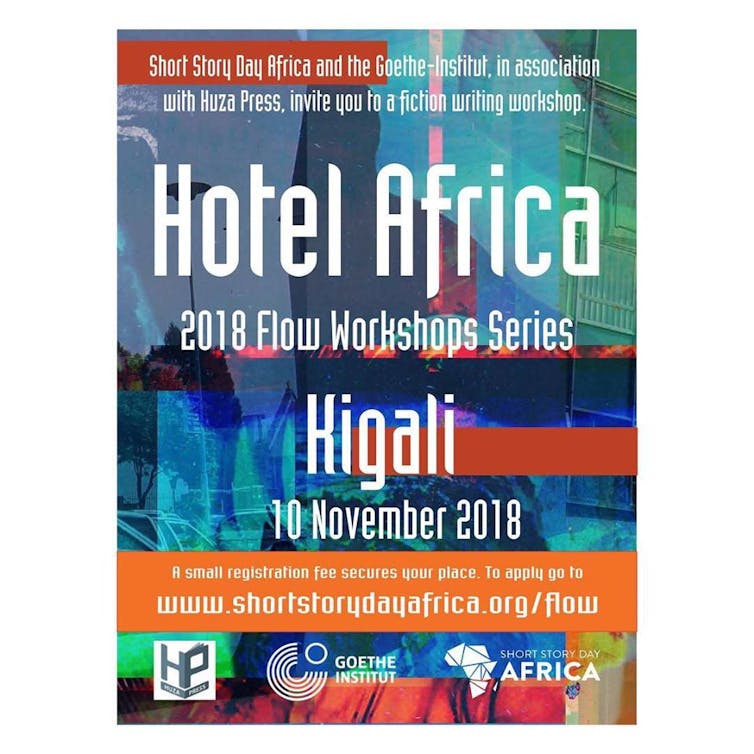
Writers’ organisations such as FEMRITE, Kwani?, Farafina, Writivism, Storymoja and Short Story Day Africa, among others, are active in the literary industry through publishing, creative writing programmes and providing access to major award organisations and international publishers.
They are, in the process, contributing to canon formation.
Short Story Day Africa, for instance, pegs its yearly competitions on the promise that the winning stories will be automatically submitted for the Caine Prize. In fact, the 2014 Caine winning story and one other shortlisted story were initially published in its anthology Feast, Famine and Potluck (2013).
In the African academy, creative writing is usually offered as a single course within a larger programme or is available only at selected universities. This has resulted in a market gap that has been quickly filled by writers’ organisations. They fill this gap by offering short term courses on various aspects of creative writing. This is in part because the local literary organisation possesses the cultural capital necessary to link writers to prize organisations and publishers, and therefore to global visibility.

Doseline Kiguru does not work for, consult, own shares in or receive funding from any company or organisation that would benefit from this article, and has disclosed no relevant affiliations beyond their academic appointment.
Source: The Conversation – Articles (AFRICA)
Read more on The Conversation.
Join the fun: Add Your event | Submit a Press Release | Add your listing.


