What we found about bacteria that resist antibiotics in seafood:
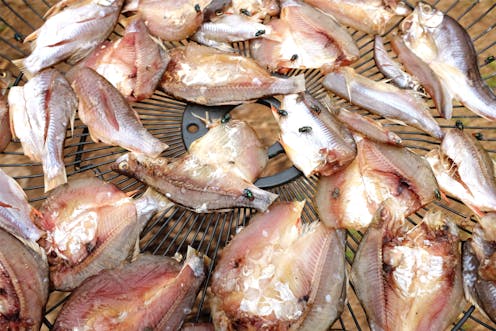
It’s important to gain a deeper understanding about the various ways in which humans and animals have been exposed to antibiotics, and the rise in bacteria found in food that’s resistant to the drugs. This explains why there has been a big increase in research into the sharp rise in bacteria found in food, or food sources, that are resistant to antibiotics.
It’s an important subject because their presence in the environment poses a threat to global public health, food safety and human health.
My research has focused on the rising occurrence and prevalence of these bacteria. For example, in a paper published three years ago, I set out to find possible solutions to the growing burden of food borne diseases. My focus was on developing countries. Yearly, more than 91 million people in Africa fall ill of disease acquired from food.
The widespread of illnesses emanating from consuming contaminated seafood prompted further research.
My colleagues and I sought answers to questions about the safety, quality and spoilage of seafood. In a study that I co-authored, we observed the prevalence of antibiotic resistant bacteria in the seafood, seawater and sediment samples that were evaluated. This posed a danger to public health especially those living close to the marine environment and whose livelihood depend on seafood farming.
In the beginning
The use of antibiotics dates back centuries but only gained prominence when, in 1928, the scientist Alexander Fleming discovered penicillin, known as the first “antibiotic” (“against life”).
But, Selman Waksman, a microbiologist, was reportedly the first to use the word “antibiotic” in 1941. He used it to mean substances produced by a microorganism that are capable of stopping the growth of other microorganisms.
Because of the effectiveness of the initial antibiotic in treating medical diseases the classification and commercialisation of antibiotics began from 1940 to 1961.
At first, antibiotics were effective against a wide range of disease-causing microorganisms. But as human development and globalisation increased, there was a hike in the abuse of these once “magic chemicals”.
Read more: Antibiotics: interplay between humans, animals and the environment is key
This resulted in antibiotic resistant microorganisms. One type is seafood borne antibiotic-resistant bacteria.
Seafood
An increase in the world’s population has resulted in an increase in the demand for sustainable food. The production of seafood through aquaculture has been identified as a sustainable source of food that can provide nutrients and minerals required for healthy growth.
But to avoid mortality and increase economic values, aquaculture farmers usually use antibiotics. This has resulted in increasing presence of antibiotic-resistance in seafood.
This has led to scientists asking various questions relating to the safety of seafood. These include: what are the different types of bacteria that are present in raw, processed and cooked seafood? Are they resistant to antibiotics? If they are resistant, what are the type of antibiotics that they are resistant to? Are there links between the bacteria in raw and processed seafood and are there genes responsible for these resistances?
Answering these questions will help save humans and animals from antibiotic-resistant bacteria that could cause life threatening illness.
I have had keen interest in seafood as a growing means of both income and food sources. I have conducted a range of research in search of answers. These include:
-
Colleagues and I conducted research into the presence of the bacteria Aeromonas hydrophila in seafood, seawater and sediment. The bacteria could cause life threatening disease especially in immunocompromised individuals and can kill marine animals. What was particularly disturbing is that we found that the bacteria were resistant to a range of antibiotics. These included vancomycin, novobiocin, streptomycin and gentamycin.
-
We also studied other antibiotic-resistant bacteria such as Vibrio in seawater and sediment. The bacteria can cause gastroenteritis in people if they consume seafood contaminated with it. We found that the disease-causing bacteria were present in both seafood and the marine environment. The bacteria were resistant to antibiotics.
-
We also reviewed previous studies by other scientists on various seafood to know the type of antibiotic-resistant bacteria that were present and the type of antibiotics they were resistant to. We observed that antibiotic resistant bacteria were present in clams, oysters, mussels, shrimps and fish.
The way forward
Concerted efforts and approaches are needed to deal with the global public health threat posed by antibiotic-resistant seafood-borne bacteria in the environment. This must involve governments, scientists, individuals, and agencies.
Read more: The world needs ‘antibiotic guardians’ to safeguard their future use
One useful step would be to launch educational awareness programmes to sensitise aquaculture farmers on the negative impact of the use of antibiotics. This could help reduce the use of antibiotics in aquaculture, preventing the rise in antibiotic-resistant seafood-borne bacteria.

Olumide A Odeyemi does not work for, consult, own shares in or receive funding from any company or organization that would benefit from this article, and has disclosed no relevant affiliations beyond their academic appointment.
Source: The Conversation – Articles (AFRICA)
Read more on The Conversation.
Join the fun: Add Your event | Submit a Press Release | Add your listing.


