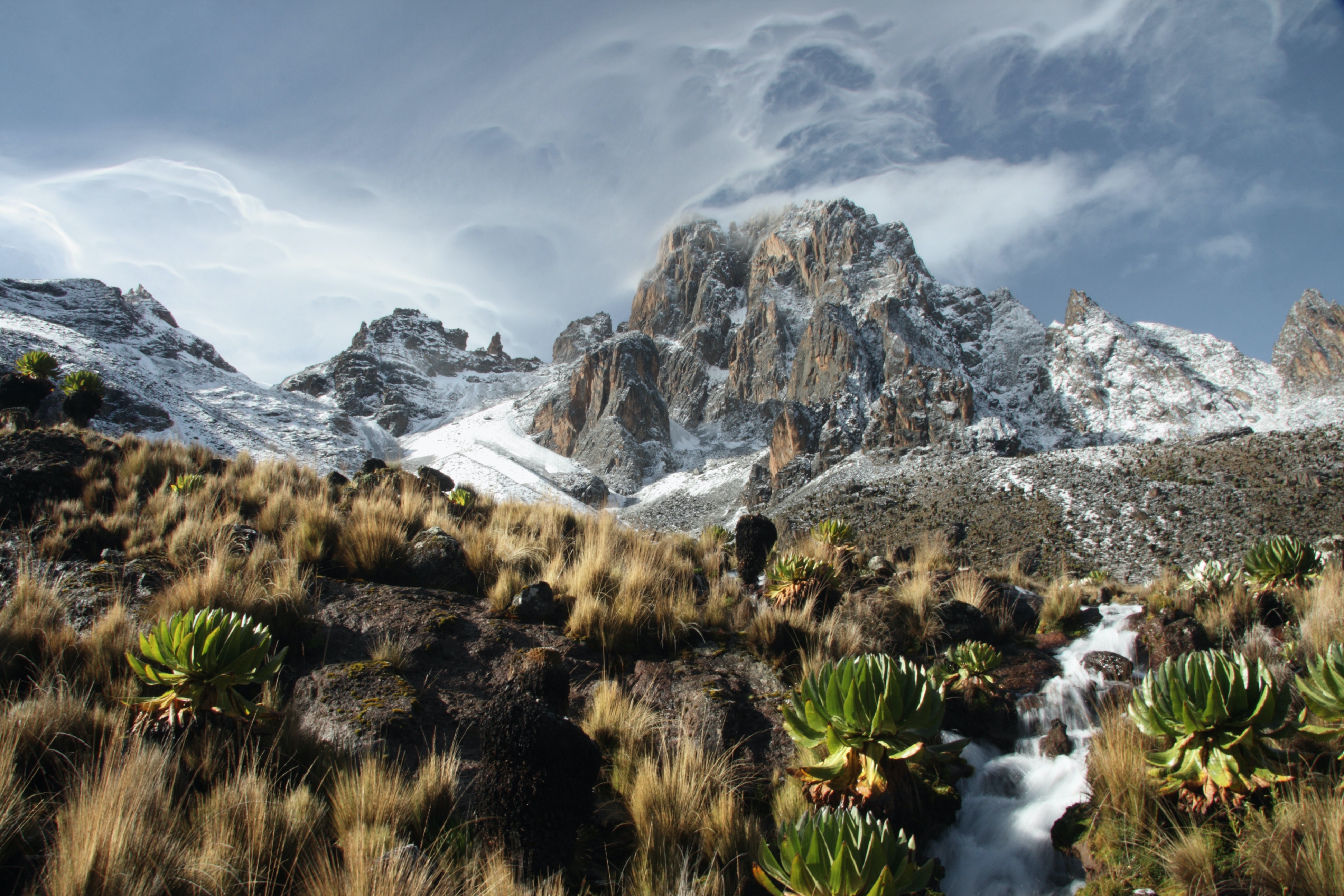
Mountains are special places. They have distinctive climates that are generally cooler and wetter than surrounding lowlands, and they host plants, animals and landscapes that are uniquely found in these environments. However, mountains are under threat because of climate change, and this has an impact on every single property of mountains, including their climate, weathering and erosion processes, soils, ecosystems, water resources, geological hazards, regional economies, and cultural practices.
My work on the impacts of ongoing climate change in mountains highlights the sensitivity of mountain properties and processes to changes in temperature and precipitation – mainly expressed in mountains as snowfall. However, there is less understanding of mountain systems in Africa compared to other mountains globally. This article therefore focuses on mountain properties in Africa, why these are particularly sensitive to climate change, and why this is important.
Ice and snow
One key property of mountains worldwide is that they are often covered by snow and ice (glaciers). This reflects moist air and cold temperatures over mountain summits. Not only do snow and ice present unique habitats for plant and animal species, they also have a vital role in the regional climate systems of mountains. Snow and ice tend to be light in colour, so they reflect sunlight back out to space, keeping the land surface cold. This is called the albedo effect.
However, if snowfall does not take place or the snow melts away, the mountain land surface remains dark. This means it absorbs rather than reflects the sun’s energy, making the surface warmer. This can cause more snowmelt, exposing more dark rocks, with more heating and melting.
The outcome of this process is that changing patterns of snowfall have big implications for mountain heat budgets. Mountains worldwide are already warming twice as fast as the global average. This makes them particularly sensitive to climate change.
African mountains are not immune to climate change. Small glaciers still exist in three mountain massifs – Mount Kenya (Kenya), Kilimanjaro (Tanzania) and the Rwenzori mountains (Uganda) – but these are in rapid retreat. They are also predicted to disappear entirely by the middle of the century. Snowfall is also highly variable, such as over the Maloti-Drakensberg mountains of southern Africa.
The full implications of this loss of ice and snow, and of climate change in African mountains more generally, have not been fully considered. Ice retreat in other deglacierising mountains worldwide leads to a substantial increase in hazards of different types, including rockfalls, landslides and debris flows. These hazards can also take place thousands of years after initial ice retreat.
This may mean that, even though the glaciers that exist in Africa today are very small, any resulting hazards could potentially be large and unpredictable in their timing and location. These are potentially future issues in African mountains.
Another important factor is how snow and ice melt across African mountains will affect their wider landscapes. Snow and ice often serve as water sources to surrounding communities, especially in locations that are water scarce, which includes East Africa. Water availability in the environment influences soils, ecosystems, river processes and the potential for flood and landslide hazards.
The presence of snow and ice therefore has wider environmental significance across mountain landscapes, and in ways that are not fully understood.
Other important roles
African mountains are also important for other reasons. For example, they host the Afromontane biogeographical region, a global biodiversity hotspot of endemic podocarp (conifer) forest species that extends as a corridor through upland areas of southern and eastern Africa.
Above the treeline, alpine pastures provide grazing land for herders, a key socioeconomic and cultural activity in remote mountains in Africa.
Summer and winter tourism – whether in South Africa or Morocco – is also linked closely to mountain landscapes, snow, water and the presence of endemic species.
All of these activities are under threat because of climate change. Mountain ecosystems are critically linked to temperature and precipitation conditions. Climate change may therefore pose problems for both the survival of keystone species and for overall biome integrity, especially where they are encroached by invasive species, agriculture and forestry. These changes also have secondary effects on ecosystem services, food, fuel and carbon storage.
Thus, mountains have a wide range of properties that are linked to climate, and a key question is how mountain systems as a whole will respond to climate change over future decades.
Mountain communities
Sustainable development of mountain communities, where human activity responds to the changing nature of mountain systems, is a key strategy for minimising the impacts of climate change, both in mountains and in surrounding areas.
This can be done by monitoring and treating sources of hazard risk as a result of melting snow and ice, building resilient infrastructure and community resilience, and protecting mountains as sites of geological, ecological and cultural heritage. These actions can help limit climate change impacts on sensitive mountains in Africa and elsewhere.


