South Africa is in a state of crisis. Its current reality is necessarily shaped by historical events, not least the outcomes of the political settlement process that led to the end of apartheid in 1994.
Unlike other countries in southern Africa, where political independence came after gruesome liberation wars, the leaders of the African National Congress (ANC), which led the liberation struggle and has been the governing party since 1994 – alongside other political and social movements – managed to negotiate a transition to democracy. There were many “wins”, including assent to the election of a majority-led government and the enactment of policies that would ensure broad-based economic transformation.
This transition may be seen as a point in history where the nation navigated one of its greatest crises. But its current leadership is confronted with multiple challenges. These range from extreme poverty and high unemployment to the severe undermining of democratic institutions by corruption and state capture.
These “wicked problems” are so difficult and complex that there is no single, silver-bullet answer. There is only a range of clumsy solutions, all of which are imperfect. The policy-making puzzle, therefore, is as much about recognising the nature of the problem as seeking to mitigate risks.
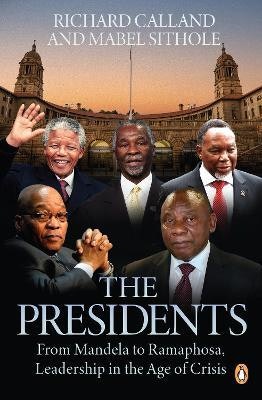
Our new book, The Presidents: From Mandela to Ramaphosa, Leadership in an Age of Crisis, assessed the leadership of South Africa’s five post-apartheid presidents – Nelson Mandela, Thabo Mbeki, Kgalema Motlanthe, Jacob Zuma and Cyril Ramaphosa. We wanted to see what lessons can be learned, especially in relation to their strategic abilities. Strategy is one of the critical leadership attributes necessary to cope with the strong headwinds that leaders often encounter.
We concluded that there has been a shortage of truly strategic leadership in South Africa in this period, with a few exceptions. Thus, the country has been unable to grapple with the underlying structural problems that are the fundamental cause of its socio-economic precarity.
Strategic thinking
What do we mean by “strategy”? Here we defer to former UK member of parliament and now (UK) Times columnist Matthew Parris. He says,
although the meaning has become diluted through promiscuous and often inappropriate use … strategy remains the best word we have for expressing attempts to think about actions in advance, in the light of our goals and capacities.
Many leaders, governments and organisations confuse planning with strategy. So this is an apt consideration to keep in mind: have South Africa’s post-1994 presidents addressed the fundamental question of what is wrong with the society and its economy, in a strategic way?
Here’s how the country’s five post-apartheid presidents have fared on strategy.
Five different styles
Mandela, the first president of a democratic South Africa, made big strategic choices – not necessarily the right ones, but certainly ones that were befitting of the times.
A primary strategy choice faced Mandela at the very advent of the democratic era. He opted for national reconciliation as his political motif. It was strategic in the sense that the alternative was to drive a strong transformational agenda without seeking to get the powerful and privileged white minority on board.
Crudely put, he could have opted for redemption and even revenge, rather than reconciliation.
This was accompanied by a deep personal commitment to the rule of law and constitutionalism. He used his presidential power to drive that message and execute that strategy, leaving the detail of management of policy and government to his number two, Thabo Mbeki.
The transition from his government’s Reconstruction and Development Programme (RDP) to the Growth, Employment and Redistribution (GEAR) macroeconomic strategy is another debatable case in point.
The RDP was the ANC government-in-waiting’s flagship programme for socio-economic transformation. It was an essentially Keynesian public investment-focused plan for improving public services such as housing, healthcare and electricity to the black majority. The shift to GEAR was deeply contested. Left-of-centre commentators and players within the broader ANC-led alliance saw it as a neo-liberal approach to fiscal and monetary policy that would constrain the government’s ability to drive redistribution of wealth and opportunity.
When his turn came as president (1999-2008), Mbeki strove to step up to the strategic standards that Mandela had set. His vision for Africa, in which Africans would take control of their destiny, was strategic. So was his determination to confront the “two nations” problem – one prosperous and white, the other poor and black.
The shift to GEAR was executed with strategic purpose and an iron fist. There were negative consequences, especially in the long term. But few, if any, big strategic choices can be win-win; there will invariably be a downside. The question is whether the leader understands and then confronts the dilemma, and in doing so can articulate the upside and recognise its intrinsic value, one that justifies the downside.
Mbeki was a flawed visionary. His legacy is scarred by his inexplicable lack of judgment on HIV/AIDS, and his stubborn refusal to accept that his government should provide antiretroviral treatment.
Motlanthe, who succeeded him, in his modest way, also recognised the strategic imperative of his short, caretaker time as president – (25 September 2008 to 9 May 2009): to consolidate authority in democratic government and to stabilise an unstable body politic in the context of the palace coup that had taken place within the ANC.
Even Zuma, his successor, in his own mendacious and deviously self-serving way, had strategic intent: to capture the state for venal personal gain. He executed it with a ruthless sense of purpose.
Current president Cyril Ramaphosa appears to be the least strategic of them all. His failure to grasp the strategic nettles inhibits his presidency. On issues such as the transition away from coal, the government stake in state-owned enterprises or the need for a basic income grant, Ramaphosa has dithered, seeking to wait until sufficient consensus has formed or putting in place cumbersome consultation processes, before reaching a clear decision.
He gets things done; he gets there in the end, but his design and use of process is that of a master tactician, not a strategist. He has not risen to the leadership heights required by the gravity of the historical moment. This requires leadership that would unshackle government from the congealing embrace of the ruling ANC and its fractious factions. A leader who would rise above the daily throng to inspire ordinary citizens with a compelling narrative of hope and change, underpinned by iron determination to take brave decisions and to execute them with a sense of purpose and urgent expedition.
Circling the problem
The crises that confronted these five presidents have been very different, with varying levels of intensity and composition. Each has faced big challenges, that could inevitably not be resolved only by their executive office. Undoubtedly, part of strategic and visionary leadership is the ability to identify existing and potential allies who are willing to invest what is required to drive a transformative agenda.
All have responded to “what went wrong”. But, because of limitations to their strategic leadership, none has fully met the challenge of confronting “what is wrong” head-on. Their ability to address the question of “what is wrong” has been constrained by the very real demands to put out fires, and keeping the boat afloat without an eye on the navigation system. And where they have focused on navigating the rough seas to get to the destination of a more equal, inclusive South Africa, the vessels of governance with a mandate to steward these transitions have not always delivered.
Mandela, Mbeki and now Ramaphosa have circled the problem (while Zuma weakened the state’s capability). But perhaps because it is such a wicked problem, and the structural difficulties run so deep, they have failed to define a strategic course that would confront the underlying structural conditions, consigning South Africa to an uncertain and worrisome future.
This is an edited extract from the authors’ new book The Presidents: From Mandela to Ramaphosa, Leadership in an Age of Crisis.


