Cape Town water crisis: 7 myths that must be bust:
One of South Africa’s biggest cities, Cape Town, is gripped by a rising panic. People are haunted by the idea that they may soon have to queue for water, carefully rationed out by local authorities under the watchful eye of the army.
But these doomsday scenarios need to be tempered. It’s true that the first step to getting people motivated to save water is to create the “impression of a crisis”. In Cape Town, however, this impression is being blown out of proportion by a number of myths that are perpetuated in social and popular media.
Myth 1: Lack of preparedness
This myth has it that the City of Cape Town saw the drought coming but didn’t prepare for it.
Climate trends over the past 40 years gave no indication of the drought’s timing, intensity or duration. In fact, dams were overflowing in winter 2014. The weather forecasts gave no indication that the 2015 drought would continue over another year.
A study by the University of Cape Town came out a few weeks ago, saying that the odds of the drought carrying over again into 2017 were less than one in one thousand. Understandably, they exonerate the Cape’s government from blame for the water crisis.
Myth 2: Lack of enforcement
This myth has it that the city didn’t enforce restrictions to curtail water wastage.
South East Queensland, Australia, became one of the most water-efficient communities in the western world because of their Target 140 campaign. Their “Millenium Drought” from 2006 – 2008 prompted residents to reduce water usage from 300 litres per person per day to 129 litres per person per day. Cape Town’s savings are already below 100 litres per person per day, and dropping.
Cape Town’s superior performance is due to its campaign introducing some pretty original stunts. For example:
-
Only in Cape Town’s campaign might the mayor knock on your door
-
Only in Cape Town’s campaign were the top 100 water users’ street names published
-
Only in Cape Town’s campaign were water tariffs structured meticulously to cater for indigent households
Cape Town’s campaign outperforms South East Queensland’s, making Cape Town one of the best water saving cities in the world. Cape Town’s example as a water saving city was highlighted at the 2015 C40 Cities Award in Paris, where Cape Town’s Water Conservation and Water Demand Management Programme won first prize, beating 91 cities including Copenhagen and Paris.
Myth 3: Unfair targeting
This myth has it that water saving campaign unfairly targets the residential sector.
The residential sector uses 66% of the City of Cape Town’s municipal water supply. Business, industry and government combined use far less.
Houses in warm climates use at least half of their water outdoors. Houses with swimming pools in Cape Town use far more water than those without. This shows that not only is the residential sector using the vast majority of municipal water, but traditionally, most of the water used by this sector is for luxury purposes.
Myth 4: Lots of water is being lost to leaks
Water lost from the system is called “non-revenue water”. Australia and New Zealand have the best water systems in the world, and lose 10%. South Africa as a whole comes in on par with the world average of 36.6%. Cape Town loses only 15% of its water. It’s close to being one of the best systems in the world.
Myth 5: Desalination plants are the answer
Australia’s desalination plants took two years to build and cost AUs$ 18 billion . A desalination plant large enough to accommodate Cape Town’s needs (450 megalitres per day) would cost 15 billion rand to build and then millions more to maintain.
There is a chance that by the time such a plant is built, the drought would be over. The city would be left with a very expensive white elephant.
Myth 6: “Day Zero” is inevitable
Cutting water use is the most important, fastest and most cost-effective way to avoid Day Zero. Nevertheless, due to the severity of the crisis, water supply schemes are also being built. These range from smaller desalination plants to groundwater extraction. These projects should be supplying up to 240-million extra litres into our system by May 2018. These new supplies, combined with target water savings, can get Cape Town through next year’s summer.
Myth 7: The water wastage blame game
Water wastage provokes anger and indignation, as it should. But some are unfairly blamed.
Fire fighting uses non-potable water from estuaries and reservoirs as well as potable water from hydrants. Fire hydrants fall under “non-revenue water”. They can’t use seawater because salt damages the equipment.
Municipal road cleaning uses non-potable water. Golf courses use non-potable water. The business and industrial sectors combined, of which tourism is only one part, use less than 15% of the city’s water.
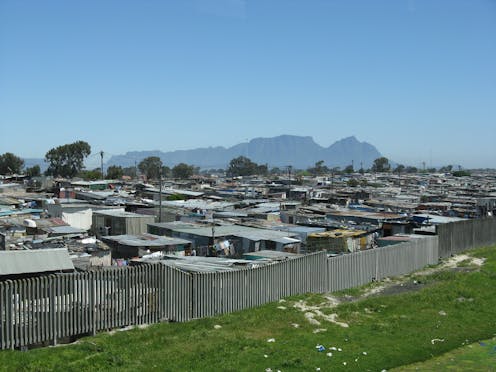
Homes in informal settlements tend to use only 40 litres per day. Informal settlements as a whole only use 4.7% of Cape Town’s water.
On reflection
Blame shifting, fault finding and panic are usual reactions to water crises all over the world. Some anxiety is good, as it motivates water saving, but blame shifting actually pushes responsibility away, and causes water wastage. The best attitude Cape Town’s people can adopt is for every person to do their best, together. The world is watching, let’s set them an example to follow.

David W. Olivier does not work for, consult, own shares in or receive funding from any company or organisation that would benefit from this article, and has disclosed no relevant affiliations beyond their academic appointment.
Source: The Conversation – Articles (AFRICA)
Read more on The Conversation.
Join the fun: Add Your event | Submit a Press Release | Add your listing.


