Five things the new government should do to help Kenya meet its energy needs:
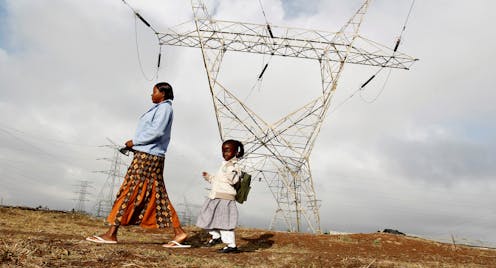
Without energy there would be no electricity to support the economic, social or political growth of any country. But to make it a real enabler of growth, there needs to be enough of it and it must be clean, affordable and reliable.
Kenya faces challenges around availability, affordability and reliability. Kenya ranks quite well on some scores compared to other countries on the continent, but quite badly on others. On the bright side Kenya’s electricity generation is clean compared to a country like South Africa which relies heavily on coal. Kenya’s power mix is 85% plus renewable based as it relies mostly on hydro and geothermal.
But in terms of supply it doesn’t rank that well. If we divide the total installed capacity by the number of inhabitants, every Kenyan would have a meagre 50 Watts if we divided the total installed capacity between the country’s inhabitants. For their part, South African citizens would have 30 times more, or 1,500 Watts.
The inadequate supply of electricity for industrial and domestic needs is due to several challenges. These include the high cost of building new energy infrastructure as well as the inability to get electricity from the points of generation to rural areas which is where about 74% of Kenyans live.
On top of these challenges, Kenya has made a commitment to reduce greenhouse gas emissions by 30% in the next 13 years. There are five action points that the next government should focus on.
Support renewable energy
The government needs to support the expansion of solar, wind and geothermal power generation. The current situation is that wind and solar together account for less than 1% of Kenya’s energy supply. By comparison Morocco has a combined installed capacity in wind and solar of about 25%.
To achieve this, the government should be more dynamic in supporting investments in the renewable energy sector by aligning them with support from the international community. One possibility is for the Ministry of Energy to run auctions where private sector companies bid to invest in infrastructure.
The government should also ensure that incentives such as tax exemption, speedy approval processes and suitable regulations are available to interested parties and provide a framework for private sector investment.
Promote solar energy
South Africa now accounts for 65% (1 361 MW) of the continent’s cumulative installed solar PV capacity, Algeria for 13% (274 MW), Réunion for 9% (180 MW) and Egypt for 1% (25 MW). Uganda, Namibia and Kenya also account for around 1% each, with between 20 MW and 24 MW each.
One significant advance would be to make solar power affordable and available, particularly in rural areas where far fewer people are connected to the national grid. The main reason for this is cost given that grid extensions are incredibly expensive. Mini-grids make much more sense.
Solar could penetrate many more rural areas if government welcomed the support of international agencies willing to avail funds for investment capital at attractive interest rates.
Kenya has taken a few progressive steps. In 2012 it emulated Japan by putting in place a feed-in tariff under which electricity companies are obliged to purchase electricity generated from solar energy at a fixed price for 10 or 20 years. The effect of this regulation in Japan was that solar power became a national priority and went from meeting 0.4% of Japan’s electricity demands in 2012 to approximately 5% in 2016.
The feed in tariff in Kenya didn’t have the same success as fewer people had the initial capital to install the panels to produce their own electricity.
Invest in energy transmission
Kenya needs to exponentially expand its energy transmission network which is plagued by flaws dating back decades. For example, power generated from the Olkaria geothermal power station, can’t be used by the households and businesses who need it in Kisumu – about 250 km away. As a result, Kenya has to make do with expensive diesel generators or, as it has done, import power from Uganda. This import grew by 32% in 2016 – from 31 million kilowatt hours in 2015 to 40.7 million kilowatt hours.
The next government needs to seriously invest in expanding and modernising the transmission network to reach more parts of the country and minimise losses.
Stay away from nuclear and coal
For a sunny and geothermally-endowed nation like Kenya, nuclear and coal power are a bad option. Yet Kenya has plans to generate 1,000 MW to 4,000 MW from nuclear power plants in the near future.
There are many problems with any nuclear plans, most crucially the issue of nuclear waste. In addition, there’s no economic justification for nuclear power as one KWh generated by this kind of plant is always more expensive than the renewable options.
In terms of coal power, Kenya has plans to launch the huge Amu coal power plant expected to produce 5,000MW of power within a period of three years. With the country’s other options, it doesn’t make economic or environmental sense to pursue coal-burning power stations.
Technology and innovations
The government should also expand and adopt the latest technology and innovations in the energy sector.
For instance, instead of committing resources to nuclear and fossil fuel studies, it should empower engineers to explore new technologies such as time-of-use metering (charging higher rates during peak periods and cheaper rates during off peak periods), mini-grids, smart-grids and off-grid technologies. They should also look at applying the Internet of Things in electrification – this is when devices can communicate information about their status to other systems, creating the opportunity to evaluate and act on this new information.
The government doesn’t need to start from scratch. Italy’s national utility, ENEL, for example is supporting a project called Renewable Energy Solutions for Africa. In partnership with the Kenya Power Institute and Strathmore University, the project trains young engineers, economists, lawyers and environmentalists to support Kenyans in the pursuit of 100% access to reliable and affordable energy in the near future.
There is no doubt that access, by households and businesses, to sufficient and reliable energy is the bedrock of any modern economy. To get there the next Kenyan government must pursue solar energy, courageously cut ties with old technology and think innovatively.

Izael Pereira Da Silva received funding from USAID, GIZ and Africa-EU energy partnership. He is affiliated with the association of energy professionals eastern Africa.
Source: The Conversation – Articles (AFRICA)
Read more on The Conversation.
Join the fun: Add Your event | Submit a Press Release | Add your listing.


