For Africa’s people, culture and heritage are a form of liberation:
Today, much effort is made to retell the stories of political activists who advanced the liberation of South Africa from apartheid. The heroic actions of Steve Biko, Chris Hani,Nelson Mandela, Winnie Madikizela Mandela, as well as lesser known activists like Dulcie September, are being excavated. They’re presented in memoirs, recovered sites and memorabilia.
The thinking is that the journeys, actions and philosophies of these activists are the nation’s “liberation” heritage. But the reality is that the country’s “liberation” heritage goes much further back, and far deeper. For centuries, ordinary South Africans have used culture to liberate themselves from the yoke of oppression.
In this, they echo Africans the world over who have employed language, belief, ritual, clothes, hairstyles, stories and food to resist and transform colonisers’ religions and cultural practices. From Candomble and Capoeira in Brazil to Santeria in Cuba, from blues and jazz music among African-Americans in the southern states of the US, to the dub culture of black British Jamaicans in the United Kingdom, Africans have steadfastly responded to oppression through culture.
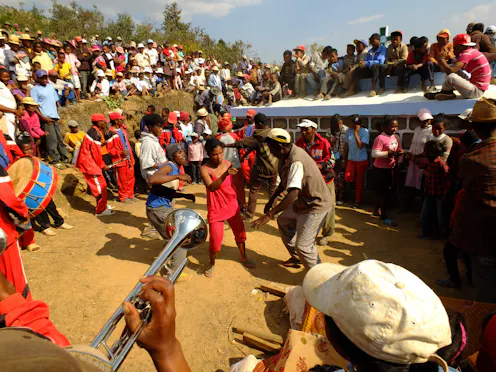
In the African diaspora of the southwest Indian Ocean, islanders have relied on culture in times of slavery and colonisation. The Malagasy still practice rituals that revive belief, emphasise self-knowing and obtain the ancestors’ blessings. Through famadihana, the ritual of the dead, the Malagasy honour their ancestors.
Mauritians also commune with their ancestors. Every January 2, Mauritians of African descent visit the graves of their loved ones. There they place cigarettes, alcohol, food and special gifts; things that their loved ones would have enjoyed. The ancestors are regularly spoken about and unusual events are discussed as potential intervention on the part of the dead.
Evidence of culture as liberation can also be seen today in the revival of indigenous dress and hair styling. These communicate alternative worldviews and challenge dominant style and beauty norms, globalising the rich material and symbolic culture of Africans.
South Africans are no different. They also use ritual and other cultural practices to respond to and challenge oppression. This is revealed in a recent survey by graduate students from Nelson Mandela University in the Eastern Cape province. It reveals the liberating potential of intangible cultural heritage.
The case of South Africa
In South Africa, inhabitants developed beliefs and practices that breached already porous “racial” boundaries. The apartheid state could not manage such practices. It was impossible to police millions of people into cultural submission. No amount of ideological work and violence could achieve that feat.
For example, some Christian churches advanced apartheid ideology but could not stop people from venerating their ancestors or blending indigenous and colonial belief systems.
Ironically and despite the social fragmentation caused by apartheid, a rich cultural heritage flourished in South Africa. The reason? Apartheid’s ideologues depended on the preservation of culture, believing it to be necessary for achieving segregated development.
In a public lecture, the South African storyteller, playwright, director and author, Gcina Mhlophe said that heritage is key to South Africans’ dignity, identity and sanity. She added that through songs loosely described as “spirit callers”, Xhosa and Zulu people can connect to an ancestral world that lies beyond their present, often difficult reality.
Burning imphepho, a herb which the Nguni people use as a ritual incense with the purpose of invoking the ancestors, some South Africans are able to connect with the world of the dead.
Today, imphepho still provides many with a means to escape the realities of life after apartheid, as it spiritually transports believers to a world beyond the present reality. The smoke from the herb facilitates communion for believers with spirit beings in the ancestral realm.
In some groups, grandparents are equally important to the liberation process. Their stories and ancient ritual practices activate memory, evoke symbolism and impart wisdom. Their sharp admonishments also liberate through humour. For instance and as Mhlophe tells, grandparents are known to have scolded by saying, “you can never earn a cow by sleeping” (meaning that one cannot achieve greatness by being lazy) or, “you are a like a buck in an endless forest” (referring to someone who is shiftless and indecisive).
Cultural riches
Understanding, valuing and embracing these parts of South Africa’s cultural heritage is crucial. The richness of those cultures and their persistence to this day, compels a rethinking of the idea of liberation heritage.
The cultural evidence shows that, for centuries, Africans and South Africans have been liberating themselves through their heritage of music, song, dance, poetry and language. Instead of promoting a narrow conception of freedom, those in power should use this knowledge to diversify perceptions of liberation in the country.

Rosabelle Boswell receives funding from the South African National Research Foundation. The South African research mentioned in this piece was funded by LOTTO.
Source: The Conversation – Articles (AFRICA)
Read more on The Conversation.
Join the fun: Add Your event | Submit a Press Release | Add your listing.


