How biobanks can help improve the integrity of scientific research:
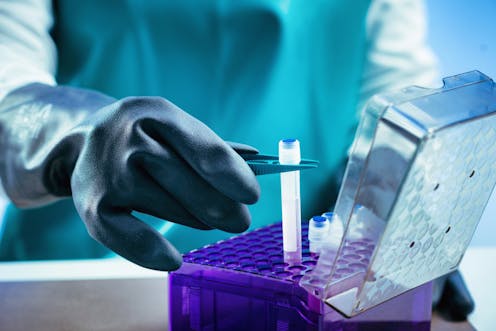
Biobanks are repositories which receive, store, process and disseminate specimens. These include DNA derived from humans and animals; bacterial strains; and environmental samples like plants and soil. Biobanks also provide the vital infrastructure for research to support scientific advancement and innovation.
In the developed world, biobanks are well established and generally well funded and supported. There are also biobanks in the developing world like regions in Africa, most notably in South Africa and Nigeria – but the technology is really still in its infancy. Simple issues like internet connectivity, access to reliable water and electricity supply, which are all necessary to run biobanks, are common.
Yet it’s in the developing world that biobanks could be especially powerful tools. For example, having access to the rich genetic diversity across Africa would allow researchers to understand disease, develop better diagnostics and treatments, medicines and vaccines, geared toward the continent’s population.
Crucially, they can also improve scientists’ ability to replicate results and experiments, a process known as reproducibility. This is very important because being able to reproduce research verifies results and means it can be trusted. Biobanks have high quality assurance and control measures in place, making them safe, reliable spaces to store material for repeated testing that could lead to trustworthy science that saves lives.
This is why low and middle income countries, like those in Africa, should prioritise setting up biobanks despite the high cost and other challenges.
A reproducibility crisis
A recent study has shown that, across the world, scientists’ ability to reproduce research is staggeringly low. More than 70% of the 1500 scientific participants in the study could not replicate other scientists’ experiments. And half were unable to replicate their own experiments.
This costs a huge amount of money. In the US alone, the estimated financial burden of not being able to replicate research translates to approximately $ 28 billion per year that’s being spent on life science research which cannot be replicated.
Why don’t researchers rigorously investigate the reproducibility of experimental works before releasing the findings? There are a few reasons.
Firstly, research costs money; costs for any lab are already high and staff may not want to spend more than they believe is necessary.
Secondly, reproducing experiments takes time – and when scientists are developing novel therapies for diseases, for instance, time can cost lives.
The study also identified study design, biological samples, laboratory protocols, and data analysis and reporting as issues. So it stands to reason that implementing standard best practices and adhering to them could partially ease the crisis.
That’s where biobanks come in.
Quality assurance
Most biobanks, whether small or large, have high quality assurance and control measures in place. Without this, they won’t generate the trust needed to function well. They ensure that sample transportation, processing, storage and analysis are done according to standard methods. They manage risk to ensure the biospecimens they store for different researchers or teams are viable and retain their quality.
Biobanks which follow best practice guidelines can be mediators for reproducible scientific research as they ensure that protocols are applied in a standardised, harmonised way.
This means that researchers who use a biobank can have some level of comfort that, at a bare minimum, any biological sample used in an experiment is consistent and controlled. For example, biobanks that use Laboratory Information Management System software can track and log a sample’s life cycle to ensure its quality hasn’t been compromised. For example, Baobab LIMS was developed at the University of the Western Cape as a management system for human biobanks.
Sample quality is critical in research, as it will influence later analysis. Biobanks are also an important tool for smaller laboratories that don’t have the finances to get international accreditation, or don’t have the right equipment for analysing specific samples.
Benefits outweigh costs
It may seem like a no-brainer to establish biobanks everywhere, given all the benefits they offer.
But there are some barriers to this happening in the developing world. Cost is one. Biobanks are generally non-profit. Non-commercial medical biobanks cannot sell specimens, as this would equate to trade in human tissue and is unethical. So biobanks’ fee structure is aimed entirely at cost-recovery.
There’s also a lack of highly skilled and trained personnel. There are some international certificates and courses specifically for biobanking, offered in North America and Europe but for the most part, skilled scientists could be trained to become proficient and staff biobanks.
These issues should be dealt with by policy makers, governments and science stakeholders. The benefits of establishing more biobanks clearly outweigh the costs – especially in the face of the ever increasing direct and indirect cost of research that cannot be reproduced and the growing need to preserve Africa’s rich genomic resources.

Dominique Anderson works for the South African National Bioinformatics Institute at the University of the Western Cape and is funded by the National Research Foundation and EU Horizon 2020 program.
Alan Christoffels receives funding from South African Medical Research Council, The National Research Foundation and the European Union Horizon2020 Programme on Biobanking Infrastructure.
Carmen Swanepoel works in a small academic biobank associated with Stellenbosch University and the National Health Laboratory Services. The NSB biobank was started with research grant funds from various source that includes, EU and NIH, SU and NHLS.
Source: The Conversation – Articles (AFRICA)
Read more on The Conversation.
Join the fun: Add Your event | Submit a Press Release | Add your listing.


