South Africans differ on land reform. But there needs to be a meeting of minds:
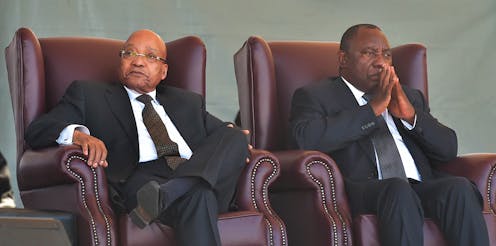
President Cyril Ramaphosa’s late night announcement that the government was going to push ahead with implementing a decision taken by the African National Congress (ANC) at its national conference last year to expropriate land without compensation has set the cat among the pigeons.
Speculation is widespread that Ramaphosa gave in to the land expropriation without compensation proposition to appease a faction of former president Jacob Zuma which has positioned itself as a champion of “radical economic transformation”.
There is also the view that Ramaphosa is out to promote party unity and to outflank the Economic Freedom Fighters, to the party’s left, in the buildup to the 2019 general election.
All this appears fair comment, and is no way unduly cynical. Politicians say things, whether or not it is entirely wise to say them, to get votes.
Yet the land debate is about much more than party politicking. In many ways, it goes to the heart of South Africa’s post-colonial politics. It speaks to fundamental racial chasms. This points to the very real danger that the different terms on which the land issue is debated simply don’t address each other.
It would seem to me that there are three broad approaches to which the land issue is debated – the instrumental, the functionalist and the symbolic.
All three approaches have a number of things in common. They all recognise the dangers inherent in the grossly disproportionate amount of land owned by whites, they accept that this has arisen out of the injustices of the colonial past, and agree that it needs to be addressed for reasons of both social justice and political stability.
Beyond that there tends to be disagreement about ways, means and the urgency of land reform.
It’s important to understand these different approaches and how they relate to the ANC’s proposed implementation of land expropriation without compensation. It’s particularly important for people who hold these different viewpoints to understand and find one another. South Africans can’t afford to let the land debate be reduced to a shouting match.
The instrumental approach
This argues its case upon both ideological and constitutional grounds.
There is the argument that the ANC’s move represents a fundamental undermining of property rights, to the extent that it might even threaten the ownership rights of ordinary house-owners in urban areas. As such, it constitutes a major disincentive to investment and totally contradicts Ramaphosa’s highly-touted goal of attracting USD$ 100 billion in investment over the next five years.
Furthermore, because of the threat to security it involves, the move will serve as major discouragement to commercial farmers, who are unlikely to pour money into infrastructural improvements if they fear being expropriated. As such expropriation without compensation is a major threat to both jobs and economic growth.
The property rights argument is backed up by those who posit that the considered constitutional amendment is unnecessary because the constitution already allows for the expropriation of property by the state for public interest purposes.
This, the constitutionalists argue, gives the state all the armoury it needs to pursue land reform with urgent speed without threatening property rights.
The functionalist approach
This says that there is a desperate hunger for land among impoverished black poor. This needs to be addressed on grounds of need and political stability.
Economically, the argument is that, while the role of commercial agriculture as the principal producer of the nation’s food supply and of significant exports need to be recognised, there are many areas where farming could be successfully undertaken by black farmers, given the right support. This perspective is steeped in history. It points out how white commercial agriculture was systematically advantaged by the state under white rule, and how prosperous black peasant communities, whose competitiveness constituted a threat to white farmers, were dispossessed.
It’s argued that there is much land available in South Africa which could valuably be transferred into private or communal black hands. Such land includes property owned by the state, land held by speculators, and farms which over the last two decades have shed most of their workers as they have turned over from direct food production to become game farms.
## The symbolic approach
This angle to the debate appeals to the heart as much to the head. It harps on the point that land belongs to Africans. It was stolen by the colonialists and should be given back.
The symbolic approach is overwhelmingly about African dignity. As such, it often involves notions of reparations. It tends to brush aside all the difficult policy issues about how land transfer should be managed, let alone the injustices which may be heaped upon white landowners who had nothing to do with the original theft of African land.
Your heading here
Ramaphosa is well known for playing the long game, a pragmatist who is ready to bend to political pressures to achieve his long-term objectives.
It may well be that he will bow to the ANC imperative to pass a law allowing for expropriation without compensation. But he will want to make sure that it will pass constitutional muster. He will ensure that this amendment meets the requirements of the property clause in the constitution.
From this perspective, it’s tempting to conclude that the huffing and puffing about the ANC’s pursuit of expropriation without compensation is really about nothing. But that’s not the case. The Zimbabwean experience confirms this.
It was the Zimbabwean government’s lack of urgency about land reform in the first decades of independence which provided the backdrop to the war veterans’ seizure of white farms in the late 1990s. It was then that the Robert Mugabe government stepped in to give the land seizures legitimacy and to claim the credit.
Much controversy attends the land question in Zimbabwe to this day. Certainly, the post-2000 land reforms have not been a total failure. Nonetheless, what is beyond dispute is that the way they have been carried out has come at enormous cost to overall agricultural production. As such, the Zimbabwe mode of land reform is one South Africa cannot afford to adopt – or to be bundled into by a panic-stricken government scrambling to keep up with events on the ground.
The address of the land issue requires a meeting of minds. The instrumental, functionalist and symbolic approaches all have their important role to play, and humility and willingness to listen to competing perspectives should be at a premium.

Roger Southall receives funding from the National Research Foundation
Source: The Conversation – Articles (AFRICA)
Read more on The Conversation.
Join the fun: Add Your event | Submit a Press Release | Add your listing.


