How collaboration can help grow and transform agriculture in Africa:
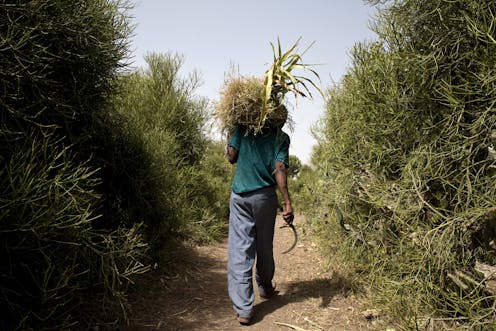
It’s been four years since African leaders met in Equatorial Guinea to commit themselves to boosting agricultural growth across the continent. This is an important way to create real change in Africa. During the gathering, all the African Union’s heads of state signed the Malabo Declaration. It offered a blueprint for Africa’s agricultural sectors, to be achieved by 2025.
For example, the declaration called for at least 10% of any nation’s public expenditure to be allocated to agriculture and rural development. It also set out plans for increasing countries’ food security by intensifying agriculture in a way that didn’t destroy the environment.
There has been some progress in attaining these goals, as a recent status report conducted by the African Union Commission shows. But there’s still a great deal of work to be done.
The report shows that in 2015 and 2016 only ten of the 47 signatory states reached or exceeded the target of 10% investment in public expenditure in agriculture and rural development. These are Malawi, Ethiopia, Angola, Egypt, Sudan, Mauritania, Mali, Senegal, Burkina Faso and Equatorial Guinea. Some other countries had invested as little as 0.6% of public expenditure in these crucial sectors. Only 20 of the 47 signatories are on track to meet the declaration’s goals by 2025.
There’s no doubt that investment in agriculture can empower economic transformation in the region. But money alone can’t solve Africa’s agricultural problems. International collaboration is key. And it can yield real results, as a project we’re involved in has proved.
The project has relied on multidisciplinary teams of both local and international researchers from the International Maize and Wheat Improvement Centre, The University of Queensland and the Association for Strengthening Agricultural Research in East and Central Africa. Ethiopia, Kenya, Malawi, Mozambique and Tanzania’s departments of agriculture are also involved.
The collaborative effort has meant that it’s been possible to address multiple constraints. These include low crop productivity, poor market access, environmental degradation, and social inequalities. The project had a strong value chain focus. This involves linking – among others – farmers, agribusinesses, traders and policy makers. The result has been improved productivity. We’ve also seen reduced climate risks and improved soil fertility and soil conservation among highly vulnerable smallholder farmers in five East and Southern African countries.
Initiatives like these can help translate the Malabo Declaration from mere document to reality.
Great gains
The Sustainable Intensification of Maize-Legume Cropping Systems for Food Security in Eastern and Southern Africa Programme is led by the International Maize and Wheat Improvement Centre. It is funded by the Australian government. Researchers from Australia and the participating African countries have worked together with researchers from the centre.
The project was set up in 2010 in response to major concerns about food security across the eastern and southern Africa regions. So far, 258,393 smallholder farmers in Ethiopia, Kenya, Malawi, Mozambique and Tanzania have benefited from our activities. We expect this number to increase to 600,000 by 2020.
To date, up to 91% of the targeted farmers have adopted at least one of sustainable intensification practices the project promotes. These practices include using drought tolerant maize non-GMO varieties; the rotation of maize and legumes; and intercrops, where a legume is sown into a standing maize crop.
Yields have increased between 30% and 60% across the five countries because these practices and associated technologies were adopted.
We don’t only work directly with farmers. It’s important to develop skills and capacity in crop and soil management, market development, resource conservation, gender issues and project management and evaluation.
One key resource here has been the Australia Awards Scholarships. These give people from developing countries the chance to undertake undergraduate or postgraduate studies at Australian institutions. So far this award has supported 65 Master’s and doctoral candidates.
Once they return to their countries, these graduates can contribute to solving the complex problems of achieving food security and eliminating poverty. They apply modern research tools, inform policy, train others and even provide leadership in their original institutions.
Harnessing potential
The Malabo Declaration is a useful document against which to measure progress. It offers countries clear targets. It sets metrics against which they can monitor their success. This will help countries to achieve many of the UN’s Sustainable Development Goals by 2030 – including those related to agriculture and food security.
The work of the Sustainable Intensification of Maize-Legume Cropping Systems for Food Security in Eastern and Southern Africa Programme offers an insight into how these goals can be met.
Countries must develop a better understanding of constraints and opportunities so they can massively scale out more productive, efficient and sustainable farm practices. They also need to develop markets, value chains and supporting policies and institutions. And crucially, continued collaborations will be necessary to increase the continent’s capacity in science, extension, policy, institutions, governance and leadership.
These must be priorities to harness Africa’s agricultural potential and spur economic growth.

Daniel Rodriguez receives funding from the Australian Centre for International Agriculture Research (ACIAR)
John Dixon works for the Australian Centre for International Agricultural Research, and is affiliated with the University of Queensland, as Adjunct Professor. He is also a Board member of the USAID funded Sustainable Intensification Innovation Lab.
Mulugetta Mekuria works for CIMMYT, which implements SIMLESA . CIMMYT is a non-profit making research and training institution with global mandate on Maize and Wheat research and development(www.cimmyt.org). He receives funding from ACIAR for this work.
Source: The Conversation – Articles (AFRICA)
Read more on The Conversation.
Join the fun: Add Your event | Submit a Press Release | Add your listing.


