How events in Ethiopia will influence the Horn of Africa:
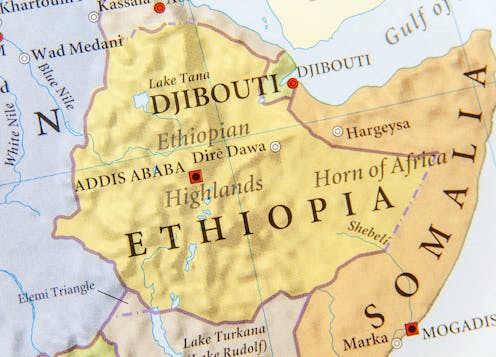
Reforms currently sweeping through Ethiopia under the new Prime Minister Abiy Ahmed have implications for the relationship between Ethiopia and its neighbours. Ethiopia is seen as the de facto leading state in the region. But it has a history of clashing with neighbouring states.
The current reforms have the potential to bolster Ethiopia’s leadership role in the region. And an Ethiopia that is perceived as a unifying force could lead to more stability.
Two recent announcements stand out: the normalisation of relations with the northern neighbour Eritrea and the signing of a peace deal with the Ogaden National Liberation Front, a separatist movement that has sought self-determination for the Somali region of Ethiopia.
The reasons these two developments are so important is that the tension between Ethiopia, Eritrea, and the Ogaden National Liberation Front have each contributed to instability in the region. The peace deal brokered between Ethiopia and Eritrea will not only affect internal tensions within Ethiopia. It’s also likely to signify a new chapter in the politics of the region.
For its part, the peace accord with the Ogaden National Liberation Front will end a long-standing conflict with the Ethiopian state. This conflict has shaped Ethiopia’s relationship with its Somali region, as well as Ethiopia’s relationship with the Republic of Somalia. The Somali region of Ethiopia is one of nine regional states under the current ethnic federal system in Ethiopia. It is mostly inhabited by Somali-speaking people.
Territorial statehood
Tensions – both within Ethiopia and between Ethiopia and its neighbours – are rooted in history. The formation of Ethiopia’s Empire state in the late nineteenth century was shaped by the absorption of smaller kingdoms in the south, east, and west of Shewa.
Shewa was Ethiopia’s political centre located north of the current capital Addis Ababa. By the late 19th century the incorporation of these territories was almost complete. By this time the capital had been moved to Addis Ababa.
This incorporation of territories is how the idea of the modern “Ethiopian state” emerged. But this imposition of state power on the new territories was contested. It has been the root cause of much of the country’s internal upheavals.
The importance of territory in Ethiopian statehood was further demonstrated by the 1952 incorporation of Eritrea as an Ethiopian province. Most Eritreans resisted the occupation and took up arms. The occupation was followed by nearly 30 years of conflict between Ethiopia and Eritrean liberation movements.
Ethiopia has also been in conflict with neighbouring Somalia since Somalia gained independence in 1960. Shortly after its independence, the new government in Mogadishu began to prioritise clan loyalties as it formed a new centralised state. This pitted various clans against each other and widened the chasm between clan loyalty and nationality.
The foreign policy objectives of the new Somali Republic were influenced by the level of influence it enjoyed in the Somali-inhabited regions of its neighbours. This included the Somali region of Ethiopia.
Eventually, the push and pull between the republic and its diaspora contributed to the rise of a separatist narrative within the Somali-inhabited regions. This spawned organisations such as the Ogaden National Liberation Front. The front is a separatist rebel group fighting for the self-determination of Somalis in Ethiopia’s Somali region.
Conflict and territory
Throughout the 1970s and 1980s Ethiopia was mired in conflicts that challenged its territorial integrity. One was the Ethiopia/Eritrea war.
Self-determination was at the core of the conflict between the Ethiopian government and Eritrean liberation movements. Throughout the conflict it was viewed as a civil war since Eritrea was regarded as a province of Ethiopia.
Similarly, the tension between Ethiopia and the Somali separatist movements was triggered by the Somali belief that their territory belonged to the Somali Republic.
These conflicts led to regional instability.
Ethiopia taking centre stage
Ethiopia has been on a path of reform since 1991. In the intervening years it has become the most economically dominant country in the region. This has cemented its leadership position. The current political reforms can be seen as part of a process of redefining Ethiopia’s role in the broader East African region – and the continent.
The governing Ethiopian People’s Revolutionary Democratic Front and the Ogaden National Liberation Front have been in peace talks since the early 1990s. The unsuccessful talks were accompanied by low-intensity conflict that severely affected the region.
That could be about to change. Thanks to Abiy Ahmed’s reform efforts, the front announced a unilateral ceasefire in August 2018, and by September peace talks had begun with the Ethiopian government and a peace deal was signed. There is cause for optimism that the deal will last because of the current leadership in Addis Ababa.
The peace deal with Eritrea has already had a number of positive outcomes that could contribute to regional stability.
Prime Minister Abiy Ahmed and President Isaias Afwerki have met several times to announce concrete evidence of the peace deal. Abiy also recently hosted his Eritrean and Somali counterparts to cement regional ties.

Namhla Matshanda does not work for, consult, own shares in or receive funding from any company or organisation that would benefit from this article, and has disclosed no relevant affiliations beyond their academic appointment.
Source: The Conversation – Articles (AFRICA)
Read more on The Conversation.
Join the fun: Add Your event | Submit a Press Release | Add your listing.


