How to increase access to cancer treatment in Kenya:
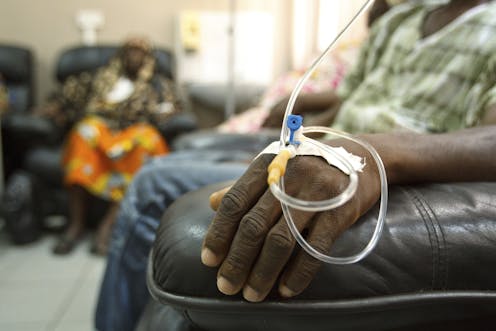
Cancer is the third most common cause of death in Kenya, after infectious diseases and heart conditions and accounts for 7% of all deaths in the country. Due to the lack of a national registry, it’s estimated that there are between 22,000 and 41,000 new cancer cases each year.
Patients seeking treatment in both private and public hospitals in sub Saharan Africa face significant barriers that result in advanced disease, misdiagnosis, interrupted treatment, stigma and fear.
Our study – conducted among doctors and cancer support and advocacy groups in Kenya – identified the biggest barriers that hinder access to cancer testing and treatment in Kenya.
These include lack of affordable cancer treatment, lower drug costs, better equipped facilities and specialist doctors. The distance to hospitals and favourable national cancer policies are also major factors.
Barriers to treatment
Kenya has limited specialised health workers and only 12 health facilities diagnose and treat cancer countrywide; seven private hospitals, two mission hospitals and three public facilities. The four radiotherapy centres are located in urban areas.
The study was conducted in January 2016 and only three counties had equipment to diagnose and treat cancer. Our study showed prohibitive costs for tests such as mammograms that check for breast cancer.
One of the respondents pointed out;
Money is the major concern. In our setup, you can’t even access medical services. The major challenge [to treatment] is lack of finances.
Patients with private insurance and the government sponsored scheme, National Health Insurance Fund, are more likely to undergo treatment than those without insurance. Capping coverage and increasing premiums further deters patients from receiving and completing treatment.
One of the patients said;
If you get cancer, most of the private insurance companies don’t want to take it up because it’s really expensive. If you’re still under the cover, they may pay for the first course of treatment, then after that they give letters that they can’t pay.
Most Kenyans don’t go for routine screening for various types of cancer. This is partly because of lack of accurate information about cancer symptoms which contributes to late presentation by patients who seek medical care when cancer symptoms are present.
People who are uninsured are put off by the prohibitive costs associated with medical checkups, screening and diagnostic tests. The treatment costs depend on the type of the hospital and the extent of the disease. It can range from USD$ 2,500 to USD$ 10,000 dollars for doctors’ fees, surgery, drugs and radiation. Subsidised or free routine or annual medical checkups could reduce the number of people who are diagnosed with cancer at an advanced stage.
Another deterrent to cancer screening and treatment is the poor attitude of health workers. These attitudes are due to lack of knowledge, social, cultural beliefs and personal biases. Additionally, poor doctor to patient communication determines whether patients seek treatment regardless of the patient’s literacy level.
Some solutions
Kenya needs to develop effective cancer testing and treatment options by training and equipping doctors in health facilities.
Doctors need to be trained to check for cancer more closely in patients. Their key role would be to screen patients at high risk such as those with a family history of cancer or those with predisposing conditions such as HIV/Aids. This greatly reduces the number of patients who seek treatment with advanced disease.
Doctors also need to be trained on patient-centred care and communication. This would improve the patient’s understanding of the disease, compliance with treatment and potentially the outcome.
Countries like Uganda, Tanzania, Lesotho and Zimbabwe have set up effective and inexpensive cervical cancer screening interventions for cervical cancer in health facilities from the primary to national level.
A national public health education campaign about the types of cancer and their symptoms would encourage people to seek medical care in time for better outcomes.
Training specialist doctors and equipping health facilities to screen and diagnose cancer can lead to timely treatment for the patients and improve their health outcomes.
Kenya needs to implement its existing cancer policies. It has been slow due to limited finances and reliant on the counties’ readiness to rollout plans. Counties such as Kisii have taken the initiative to proceed with establishing a cancer center that will be operational within the coming weeks. The country’s first cancer treatment, control and prevention policy was created in 2011, followed by the 2012 Cancer Act, which was amended in 2015.
These policies have created a framework for addressing Kenya’s growing cancer burden based on the doctors’ clinical data of seeing more patients every year.
The way forward
Our study makes four policy recommendations to improve access to treatment;
Improve health insurance for patients with cancer. In October 2016, NHIF added cancer to the diseases it will pay for, but this applies only to civil servants. Private insurance caps need to be reviewed to enable patients to complete treatments.
Establish testing and treatment facilities in all counties through the national cancer control plan. This is taking more time than planned due to the need for financial and technical resources at the county level.
Increase public health awareness and education about cancer to improve diagnoses and treatment. A national public health awareness campaign similar to the campaigns to raise awareness about HIV/AIDS and remove stigma should be rolled out. This has worked in the US. In Africa, this has began through the African Organisation for Research and Training in Cancer that provides relevant and accurate information on the prevention, early diagnosis and treatment of cancer in various African countries.
And finally, doctors should openly discuss treatment options to encourage more patients to live positively with cancer.
Sandra Greene, Stephanie Wheeler, Asheley Skinner and Antonia V. Bennett contributed to this article.

Louise Makau Barasa received a grant from the Lineberger Cancer Center at University of North Carolina to pay for the travel costs for this study's data collection.
Nicholas A. Abinya does not work for, consult, own shares in or receive funding from any company or organisation that would benefit from this article, and has disclosed no relevant affiliations beyond their academic appointment.
Source: The Conversation – Articles (AFRICA)
Read more on The Conversation.
Join the fun: Add Your event | Submit a Press Release | Add your listing.


