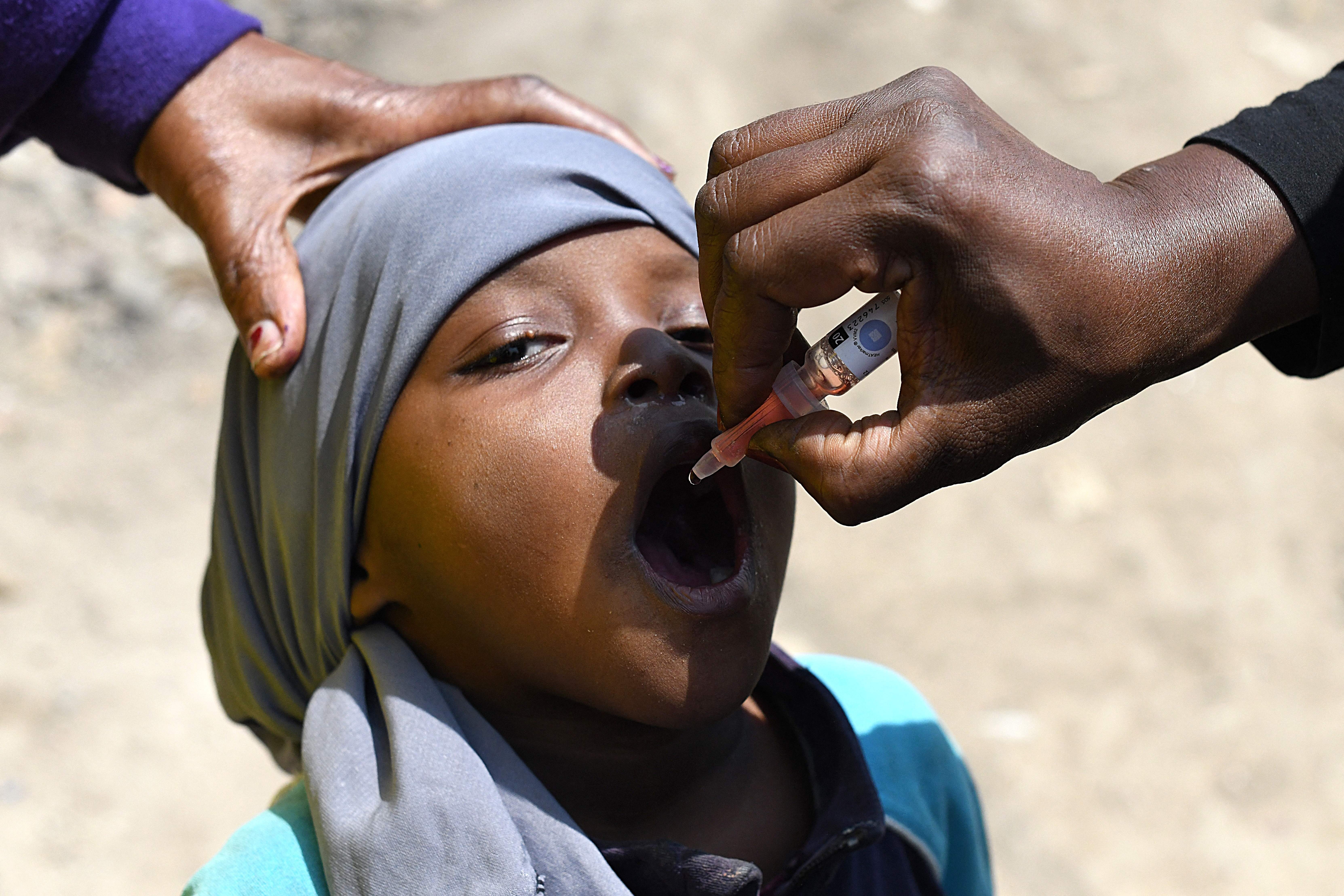
The 25th of August marks the first anniversary of a milestone that took over 30 years to achieve. Africa being free from polio – a disease that has caused death and paralysis throughout recorded history.
Polio is a viral illness that can cause sudden weakness, permanent paralysis, or death in people who were previously healthy and had no risk factors or comorbidities. It usually affects children. The virus is spread by faecally contaminated food and water or close contact.
But the outbreaks of this fearful disease have become a thing of the past, told to us by our grandparents. The reason for the disappearance? Vaccination.
The Global Polio Eradication Initiative was launched in 1988. In that year, more than 350,000 people were paralysed. Polio cases were reported from at least 125 countries.
The initiative set an original target of the year 2000 for polio eradication. It introduced polio vaccines into health programmes around the globe and ensured birth cohorts of children were routinely vaccinated. This drive reduced the number of polio cases to only 22 in 2017.
Only two cases of polio from paralysed individuals have been recorded so far in 2021. This is the lowest number ever. But an additional 62 detections of polio have been identified in wastewater treatment plants or surface water downstream of large populations in Pakistan and Afghanistan. So the case number may be artificially low due to poor surveillance or weak health systems.
Despite the efforts of health programmes around the world, there is still a threat that polio could spread again. Even one case would constitute an international event.
Read more: Why eradicating polio everywhere has been so hard to crack
Africa has had a long history with polio. South Africa used crowd-funding in the 1960s to raise funds for a research facility to develop a polio vaccine, in collaboration with international researchers. The facility originated as the Poliomyelitis Research Foundation and developed into the National Institute for Communicable Diseases, which has more recently played a leading role in the fight against COVID-19, listeria, and other pathogens.
Polio is still a large part of routine childhood vaccinations in South Africa.
No wild polio, that is polio cases caused by the natural ‘wild type’ form of the virus, has been detected in Africa since 2016. On 25 August 2020, the continent was declared free of wild poliovirus. This leaves only two countries on the globe – Pakistan and Afghanistan – where wild polio is found. A weak healthcare system and vaccine hesitancy have allowed the sustained transmission of polioviruses, and the unfortunate consequence: paralysis or death.
Poliovirus biology and vaccines
Polioviruses occur in three serotypes (types 1, 2 and 3). It is estimated that less than one in 100 infected individuals become paralysed. Others may be asymptomatic or have varying degrees of flu-like illness. Thus, when one paralysed case has been detected, there are likely 99 other asymptomatically infected individuals, making it challenging to control the spread.
There have been two vaccines used since the 1960s to prevent polio: the Salk vaccine, which is an inactivated vaccine, and the Sabin vaccine, which is a live attenuated vaccine. A live vaccine contains a weakened version of the natural ‘wild type’ virus.
Both vaccines are excellent at preventing paralysis. The two vaccines differ, however, in their ability to control asymptomatic poliovirus transmission.
The inactivated polio vaccine is an injectable vaccine that induces antibodies in the blood that prevent paralysis should the person later come into contact with wild polio. If a person later encounters wild poliovirus, the wild virus may still replicate in the person’s gastrointestinal tract and shed in their stool, potentially transmitting asymptomatically to others in the community. The inactivated polio vaccine is excellent for personal protection against paralysis. But it’s not effective at controlling outbreaks, as it does not effectively prevent asymptomatic polio transmission.
The Sabin vaccine is a live, orally-administered, weakened vaccine strain given as drops. It produces good intestinal immunity. This means that, should the vaccinated individual come into contact years later with wild poliovirus, the wild poliovirus won’t be shed in the person’s faeces. Thus, in addition to preventing paralysis, the oral polio vaccine can prevent shedding of wild poliovirus in stool. It is therefore very effective at controlling polio outbreaks. This benefit has been instrumental in decreasing polio transmission and bringing polio to the brink of eradication.
The oral polio vaccine is very effective. But if the population vaccination coverage is low, then people who get the live vaccine can transmit this virus to those who are not immunised. Over weeks to months, this transmission among the community has the benefit of immunising susceptible people. Yet, over a long period of more than six months to years, mutations can arise in the virus genome that can turn it back into a disease-causing virus. This is called a vaccine-derived poliovirus.
Vaccine-derived polio is extremely rare. But it has arisen in multiple countries over the past decades.
To combat this phenomenon, a new live vaccine has just been developed. This vaccine is called the novel oral polio vaccine, serotype 2 (nOPV2). This vaccine received emergency use listing in November 2020, just before the SARS-CoV-2 vaccines, and has already been used in seven African countries. Novel oral polio vaccines against serotypes 1 and 3 are currently in development.
Maintaining efforts
The development of nOPV2 is a game-changer in the war against polio. The current target for polio eradication has been extended to 2026.
To meet this deadline, three things must happen.
-
Health systems around the world need to keep vigilant;
-
vaccination coverage need to be kept high; and
-
we need to keep developing new vaccines to counteract evolving viruses.


