More countries need to give peaceful protest the chance it deserves:
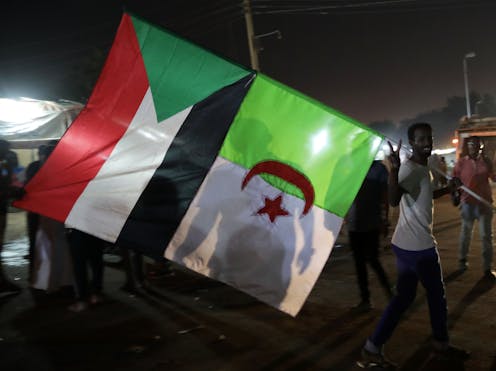
The right of peaceful protest is enshrined in the Universal Declaration of Human Rights, adopted by the United Nations in December 1948. Today, this right is recognised in the constitutions of 182 countries. However, we are still far away from universal acceptance of this right in practice.
There is, of course, nothing inherently good or bad about the causes pursued through peaceful protest. It has been used, for example, to foster acceptance for many fundamental human rights. It’s also been used to call for the rejection of foreigners, and lesbian, gay, bisexual, transgender and queer (LGBTQ) people. It has also been used for and against abortion. And in some cases assemblies deteriorate into riots.
But when a society permits people to air their grievances in the streets in a peaceful way, it allows public engagement with the matter, and creates a powerful tool for tensions to be resolved in an inclusive and peaceful manner. This is an integral part of a democratic and pluralistic society.
Yet, in spite of noble promises in their constitutions, a significant number of countries worldwide have a very restrictive approach to demonstrations.
At the Centre for Human Rights of the University of Pretoria we did a comprehensive survey of the use of force laws of every country in the world. Many countries allow the use of force by the police to disperse assemblies, without regard to the principles of necessity and proportionality, as is required under international law. Or they ominously provide that the police may use “all means necessary”.
Such an approach very easily results in an escalation of force on all sides – or in the long term suppression of the population, which can only be sustained with more repression.
The national laws of a country are the first line of defence of the population’s freedoms. The international human rights system can help to set universal standards. But it can provide only limited protection if this is not done in the country itself. Moreover, uncertainty about the applicable laws leads to dangerous “surprises”. The reform of national laws to reflect internationally accepted and clear “rules of engagement” during peaceful protest is a matter of greatest importance.
International law reflects the experience of many years and societies. It requires accommodation of those who want to take their protests to the streets but also provides that the legitimate interest of the State in maintaining law and order and protecting the rights of the rest of society should be recognised. For example, such assemblies have to be peaceful, hate crimes must be prohibited, and advance notification of large gatherings may be required to allow the State time to prepare.
Use of force laws
But, there are still some unanswered questions concerning the international standards. It is in this context that those of us who serve on the United Nations Human Rights Committee are in the process of drafting a document aimed at helping to bring more clarity on the standards applicable to peaceful assemblies.
For example, may demonstrations be held on privately owned property? If the marketplace where people used to assemble has been replaced by shopping malls, can people no longer demonstrate there? Can assemblies occur online, or do they require physical presence? What are the standards for the use of less lethal weapons for law enforcement?
In the wake of the killing of 34 striking miners by police in Marikana, South Africa, in August 2012, a local company has started marketing drones which can be used to dispense weapons such as teargas and rubber bullets.
The selling point is that this will prevent situations where the police may feel compelled to use lethal force to defend themselves. However, the remote use of force raises the risk of treating people like animals, and adding insult to injury. Should this be allowed?
There are also questions where the African context may matter. The approach in Europe and elsewhere has largely been that organisers of demonstrations cannot be held responsible for riot damage.
Do the same considerations apply in Africa, where vendors who bear the brunt may not not have insurance and are without recourse? The South African Constitutional Court has held that organisers can, under certain circumstances, be held responsible.
Need for reform
While it is necessary to find answers to these questions on the international level, the real protection of people’s rights lies in their countries’ legal systems. The test for the new UN guidelines will be whether they help to ensure greater compliance with international standards, and the realisation of the promises of nations’ constitutions.
It is in the interest not only of the people concerned, but of democracy itself, in Africa and elsewhere, that internationally accepted ground rules are set for peaceful assembly as a tool of change.

Christof Heyns is a member of the UN Human Rights Committee.
Source: The Conversation – Articles (AFRICA)
Read more on The Conversation.
Join the fun: Add Your event | Submit a Press Release | Add your listing.


