Study shows young South Africans have no faith in democracy and politicians:
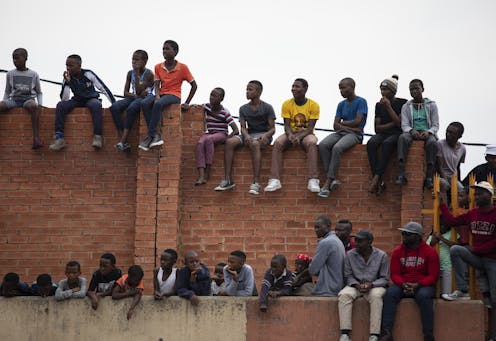
On the eve of South Africa’s sixth democratic elections on 8 May, thousands of young people took to Twitter to state reasons for why they had no intention to cast their votes. They used the hashtag #IWantToVoteBut.
The trending topic at the time of the elections provides some insight into why young people opted out of casting their vote. At the time, pollsters and commentators were already touting the power of the youth (people under 29 made up 21% of eligible voters) as well as the threat of non-participation.
The Electoral Commission of South Africa has revealed that about nine million people eligible to vote were not registered to vote. Of these about six million were young people. Alarmingly, less than 20% of eligible first-time voters (those who turned 18 since the last national election) registered to vote. The election was ultimately held with the lowest voter turnout since 1994.
Looking at the trends over the last few years, there’s been a systematic decrease in youth participation in elections. Does this reflect youth apathy or lack of confidence in the system of democracy to meet their needs?
The Centre for Social Development in Africa, at the University of Johannesburg, did a study – “The 2019 Elections: Socio-economic performance and voter preferences”. It shows that young South Africans place socio-economic well-being above democratic rights. Simply put, the vast majority of young people believe that it is more important for the country to cater for their needs than to vote. This is a worrying trend indicating a loss of faith in democracy.
The findings were drawn from a survey conducted in the fourth quarter of 2018. The study asked to what extent are government performance in the delivery of socio-economic rights, perceptions of corruption and issues of governance likely to influence voter preferences in the 2019 national general elections? It consisted of 3431 respondents (representative of more than 38 million potential voters), the majority of whom are youth between the ages of 18 and 34 years.
Livelihood trumps the vote
The study found that young people were more distrustful of political parties and governmental organisations than older people. While all potential voters put more value on socio-economic well-being than democratic rights, this was more pronounced among young people.
Specifically, 58% of youth in South Africa view meeting their basic needs (such as finding jobs, income, housing) as more important than voting, and having access to courts, freedom of speech and expression. Only 27% (less than three out of ten) of the young respondents believed democratic rights were more important. The remaining 15% said they didn’t know which was more important. Respondents also reported a lack of faith in democracy to deliver socio-economic transformation that can meet their needs.
Placing socioeconomic rights above democratic rights is understandable given the multiple struggles that young people face. 25 years since the end of apartheid, the country is still arguably the most unequal in the world. The most recent workforce figures show a 55.2% joblessness rate among the country’s youth –- almost twice the general (already shocking) national unemployment rate of 27.6%.
Young people are also grappling with the well-documented failings of the education system which has left many school-leavers unprepared for (or unable to access) tertiary education or become entrepreneurs.
As our research on youth unemployment shows, there are multiple barriers keeping many of the country’s young people locked out of labour market opportunities. These include a mismatch between their education and the skills needed in the economy. The particularly low level of skills among young people constrains their ability to enter the labour market. Another problem is that the costs of work seeking are particularly high for young people.
Lack of faith in government
A qualitative study the Centre for Social Development in Africa conducted among young people aged on average 17.5 years old in 2015, called “Youth transitions in South African communities” shows that young South Africans do care about politics and their role as citizens, but were not convinced that the government would or could address their concerns.
Across the focus groups we observed young people who were surprisingly well-informed about current affairs. They held passionately expressed opinions about various political issues – from xenophobia to the government’s failure to provide basic services such as electricity, water and sanitation.
They also had real concerns about the problems facing their communities; including crime and unemployment. Perhaps it was this awareness that informed their views on formal political processes. The report also found that “most of the participants indicated an unwillingness to vote”. Furthermore, the report said
A common thread in all the focus groups was the notion that young people felt voting would not bring about meaningful change to their lives.
All of the participants said they generally had no trust in political structures and processes – like voting, demonstrations, and political party membership. They reflected a deep cynicism about formal political processes, indicating distrust of leaders.
They were well aware of the failures of the then President Jacob Zuma’s ruinous administration. But, more broadly, they felt that political leaders wanted their vote but then did not deliver on promises. They believed that political leaders were selfish and had no interest in the well-being of their communities. Many of the participants reported feeling alienated from all of South Africa’s political leaders.
Need for urgency
Tackling youth unemployment and social exclusion requires bold strategies and decisive action. Evidence-based strategies are needed that tackle the structural barriers to youth unemployment and the persistent educational and socioeconomic disadvantage that they face. These should include quality and relevant education that will prepare them for the changing world of work; smoother pathways to vocational and technical education; and access to employment services that link them with labour market opportunities.
These strategies are crucial to counteract their persistent marginalisation and restore their confidence in democracy. Only in this way will South Africa be a politically stable, just and peaceful society.

Leila Patel receives funding from Department of Science and Technology and the National Research Foundation for the South African Chair in Welfare and Social Development. She also received funding for this research from the Faculty of Humanities Research Committee and the University Research Committee, University of Johannesburg
Lauren Graham receives funding from the National Research Foundation, the University of Johannesburg's University Research Committee and the Government Technical Advisory Centre. She has previously been funded by the Ford Foundation and the British Academy.
Source: The Conversation – Articles (AFRICA)
Read more on The Conversation.
Join the fun: Add Your event | Submit a Press Release | Add your listing.


