No more mercy for bad behaviour at South Africa’s state owned companies:
South Africa’s 2018 national budget was presented amid growing concern about the financial sustainability of key state owned enterprises such as the power utility Eskom and South African Airways. Sibonelo Radebe asked Misheck Mutize and Sean Gossel to set out what the budget means for them.
What is your general impression of the budget speech?
Coming on the back of the state of the nation address presented by the new President Cyril Ramaphosa, the 2018 national budget has renewed hope about the future of the country’s economy. Combined with the pledge by Ramaphosa to root out the ills bedevilling state owned enterprises, there is optimism that South Africa’s economy is turning the corner.
There were signs of the rebound from the numbers presented by the minister – even though there’s still huge weakness in the economy. Last year’s economic growth projection has been revised, up from 0.7% to 1% and growth in 2018 is projected at 1.5% rising to 2.1% 2020. Of course the country needs much more robust growth than this. The hope is that things will improve with the interventions promised by the new president.
It was a tough budget, especially for the poor. But the tax hikes and other measures are necessary given the need to narrow a R42 billion revenue shortfall, which was widened by the need for a funding solution for fee free higher education.
Overall the budget presented a solid step towards arresting the fiscal deficit and stabilising government debt. Fiscal prudence is painful. But it’s necessary to save the country from further downgrades, and from sliding deeper into debt.
What do you think about the treatment of state owned enterprises?
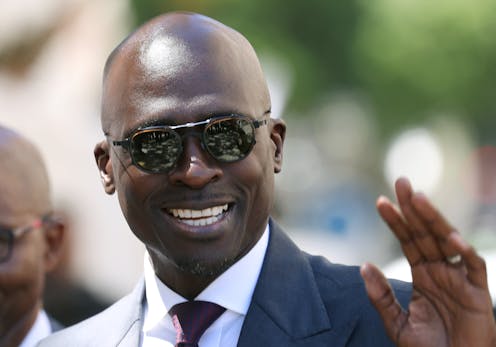
Finance minister Malusi Gigaba underscored the commitment to dealing with patronage, corruption and incompetence in state owned enterprises. (This is rather ironic as he has been fingered as one of the architects of state capture as the opposition vocally pointed out before the speech got underway). Nevertheless, this must be commended. The looting and mismanagement has caused a great deal of damage to the economy as well as business confidence.
The message is that there will be no mercy for misbehaviour in this space. Time has also run out for those who justified mediocrity in parastatals. Gigaba’s statement that state-owned companies are expected to fund their own operations must also be welcomed. Although similar calls have been made in the past, this time there may be political will.
This means that the government’s limited resources can now be allocated to other more important things. Hopefully the emphasis will shift towards finding long-term solutions to the country’s ills.
What must happen to get state owned enterprises right?
It is refreshing that the new president has indicated his commitment to appointing qualified and experienced people to lead state owned enterprises. This is a welcome substitute for the disastrous policy of cadre deployment – the practice of appointing people to state owned enterprises largely for their political connections.
But it’s also time the government actively reconsidered its interest in state owned enterprises. The cost of maintaining ownership has become too high. Over the past 24 years state owned monopolies have been the site of gross inefficiencies and high social costs which in turn have hampered the economy’s performance. The time is ripe for the government to begin unpacking monoliths such as Eskom, Transnet and the Passenger Rail Agency of South Africa in preparation for partial privatisation or public listings on the stock exchange.
The options would be to either partially privatise the entities, or to open up the space for private players to buy equity stakes. Government might in fact be considering these options given Gigaba’s comment that:
In the coming year, government may be required to provide financial support to several state owned enterprises which could be done through a combination of disposing of non-core assets, strategic equity partners, or direct capital injections.
It is good that the minister mentioned these refinancing options. But there’s still talk of government support and guarantees for several state owned enterprises.
What general advice would you give to the new administration following this budget?
As the government goes about meeting the spending cuts it announced (by R85.7 billion) over the next three years and increasing revenue by R36 billion this year, it urgently needs to wean state owned enterprises from the fiscus. Opening the public sector to participation by private players would be the optimal way to go about this.
Allowing these enterprises to continue operating as monopolies in key sectors will simply allow inefficiencies and market distortions to continue. We would argue that the unions and politicians that have campaigned against privatisation have exaggerated the negative impact on the poor. Evidence from other countries suggests that introducing private ownership doesn’t necessarily lead to massive job losses nor expensive services.
The new administration should depoliticise the issue and face the reality that state owned enterprises need an immediate and realistic response to save both the economy and the fiscus. Without that, the government will not be able to wean them from guarantees and bailouts, and their failure will be eminent.
We would also urge the government to follow up on the promise to hold corrupt public servants to account and to ensure tender processes aren’t abused by closing loopholes in public procurement.

Sean Gossel receives funding from the University of Cape Town.
Misheck Mutize does not work for, consult, own shares in or receive funding from any company or organization that would benefit from this article, and has disclosed no relevant affiliations beyond their academic appointment.
Source: The Conversation – Articles (AFRICA)
Read more on The Conversation.
Join the fun: Add Your event | Submit a Press Release | Add your listing.


