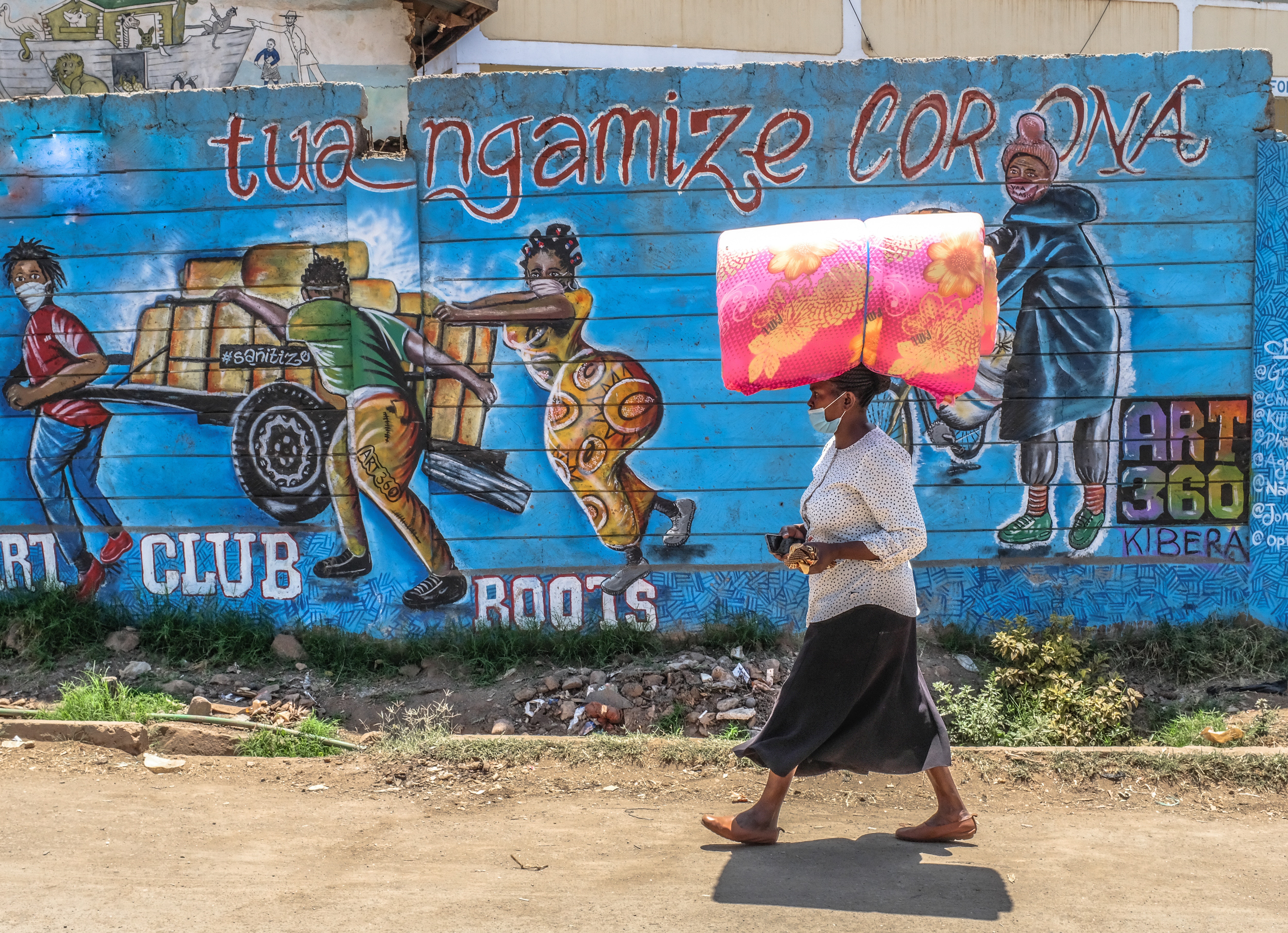
African countries are still reeling from the effect of measures, such as lockdowns, taken to contain the spread of COVID-19. Though painful, they were a vital part of the successful public health response mounted by many African leaders.
The quick responses by most African countries meant that they were able to avoid the large-scale loss of life seen elsewhere. The 1.8 million infections and 44,000 deaths recorded on the continent by mid-November are a great loss. They are, nevertheless, far from the catastrophic predictions made back in March and April.
But the fight is not yet over: the Africa Centres for Disease Control has recently warned of a fresh wave of infections, reporting almost 9,000 cases a day. With lockdowns easing and borders opening this figure will certainly rise.
If good public health measures helped Africa tackle its first COVID-19 wave, a response led by scientists and researchers must be central to any current and future threats. This was emphasised by several top African scientists gathered at a recent webinar convened to discuss next steps to contain the pandemic.
The strong leadership displayed by many African countries during the pandemic is certainly a lesson for others. But strong leadership needs good science. For Africa, this means that research for treatments and vaccines for COVID-19 must take place here, led by African scientists and tailored to this specific context.
Lessons from Africa
Global solidarity might be lacking in the fight against COVID-19 but regional cooperation is not, especially in Africa. As the director of the Africa Centres for Disease Control, John Nkengasong, pointed out, “the continent came together very quickly”.
Under his leadership, 55 health ministers gathered in Addis Ababa in February to develop a joint African strategy for the COVID-19 outbreak.
One of the decisions taken was to develop a platform to train 100,000 health workers and for the common procurement of diagnostics medical supplies. Called the “Partnership to Accelerate COVID-19 Testing in Africa (PACT)”, the initiative was set up for multiple countries and has led to 12 million tests being conducted.
Read more: What developing countries can teach rich countries about how to respond to a pandemic
Many countries closed borders and implemented lockdowns. South Africa instituted one of the world’s strictest. For its part the Democratic Republic of Congo (DRC) instituted a lockdown and suspended all flights into the country – the main way cases were being introduced.
A number of countries also developed impressive testing programmes. One was Senegal, whose Institut Pasteur in Dakar was one of the only two laboratories with COVID-19 testing capacity when the pandemic began. Results are now available in hours. The country has also trained health workers elsewhere on the continent, and the Institut is developing home-test kits which should be available soon.
In South Africa, an army of health workers with experience in HIV and tuberculosis were used as contact tracers for COVID-19.
Another feature of the response in some countries was getting the buy-in of communities. Steve Mundeke Ahuka, the incident manager for the COVID-19 outbreak in the Democratic Republic of Congo, said the country drew on its past experience in managing the Ebola response.
This involved using social scientists and epidemiologists to study perceptions of Ebola in the community because of the distrust of outsiders. These insights were used to create and adapt communications to combat fake news and support vaccination and contact tracing. After two difficult years, the strategies paid off: over 300,000 people were vaccinated.
Similar strategies were used for COVID-19.
Research on COVID-19
Most of the research taking place for COVID-19 is happening in North America and Europe. Large, well-organised clinical trials that were launched months ago are already saving lives.
This intensity of research is needed on the continent.
There are a number of reasons for this.
The first is that Africa has a different genetic profile. According to Helen Rees, executive director of the Wits Reproductive Health and HIV Institute in South Africa, who is leading COVID-19 vaccine efforts in South Africa,
Populations have different genetic backgrounds, and they are exposed to different infections such as HIV and malaria. We need to know if future vaccines will be safe and effective in our populations.
Another reason for more research on the continent is that it can help drive policy. As Borna Nyaoke Anoke, senior clinical project manager and medical manager at DNDi, argues:
We need large, well-conducted, randomised clinical trials in Africa to support policy change for treatments.
One of the most urgent priorities is the need for treatment for mild to moderate cases to avoid mass hospitalisations that would overwhelm already overburdened health systems. DNDi will soon be launching a large clinical trial with a number of African and European partners to fill this gap. A number of treatments that can be given to patients with mild symptoms will be tested.
Lastly, African countries need to be active in the research arena to ensure that they are not last in the queue for life-saving treatments and vaccines.
African countries have proved that they have the skills and expertise to provide local solutions to this global pandemic. They need to build on this success together to keep the pandemic at bay.


