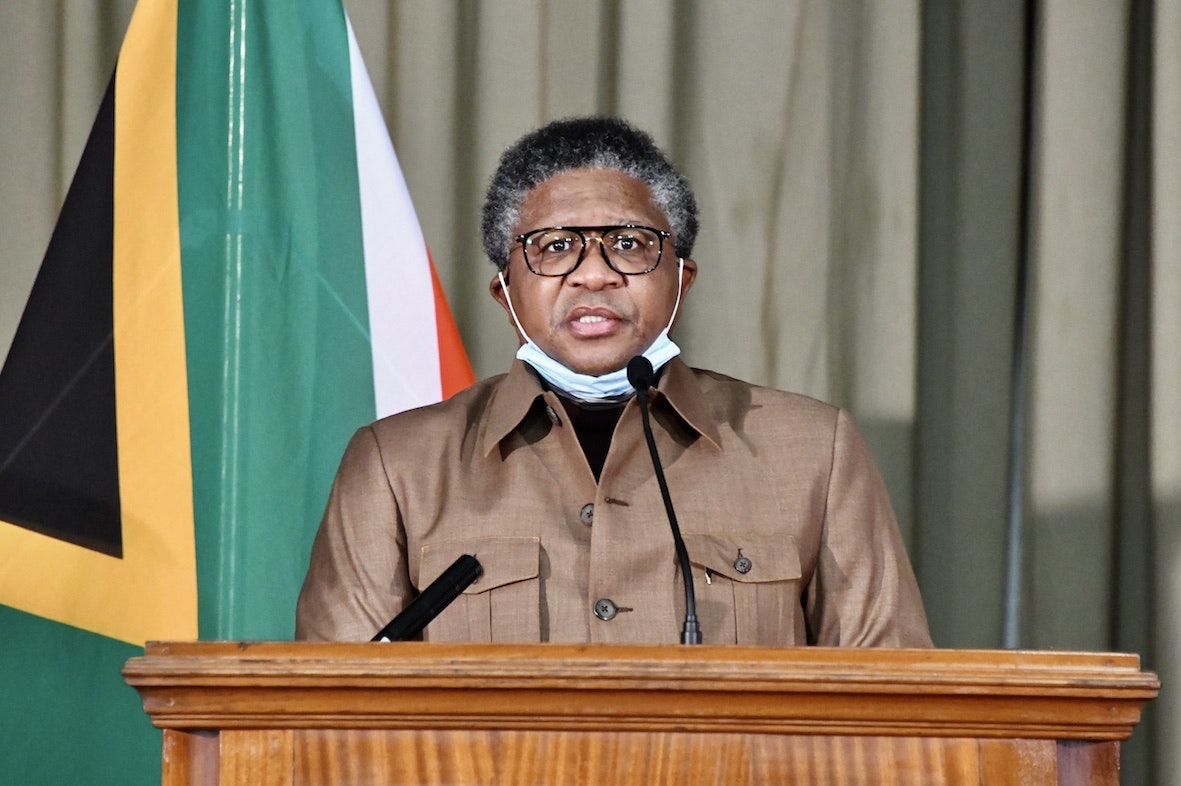
South Africa’s transport minister, Fikile Mbalula, has confirmed his commitment to implement a new subsidy for the country’s minibus taxi sector. For the first time, he also provided a timeline for the proposal, promising to work with the national treasury and the taxi sector to put the subsidy in place by April 2021.
Mbalula has described the prospect of this subsidy as a “new dawn”. But the design of the subsidy that has been reported so far suggests something much more familiar.
The approach is largely geared towards financing the improvement of the “capital” stock of the sector, such as upgrading vehicles. As we have both previously written, successful reform in the taxi sector is unlikely without a concurrent focus on providing incentives for the industry to change the way it operates.
This is not the first time that government has provided a capital subsidy to the sector. The first was with the “recapitalisation programme” of 1999, which is still active. The recap programme provides a one-off contribution to buying a new minibus. It appears that the new proposed subsidy will be similar, but with a more sustained model of continuous financing available to upgrade vehicles.
We believe that the motive behind the proposed subsidy is problematic. This was articulated by President Cyril Ramaphosa in his remarks in support of Mbalula’s plans:
Given its financial size, formalising the taxi industry is a vital step towards ensuring its contribution to the national tax revenue base.
If the main purpose of subsidising and formalising the taxi sector is to bolster operators’ finances so that they pay more taxes, it is doomed to fail. South Africans should not imagine that providing more money to the taxi sector is going to change the national government’s problems with revenue generation.
Moreover, this goal does not address the main reason for subsidising the taxi sector: to provide cheap, frequent and quality public transport so that all people can access and generate economic opportunity in South Africa’s cities.
We propose that any new subsidy should address this fundamental goal of equitable access.
Solving the real problems
By its definition, a subsidy that works towards the goal of safer and wider access must prioritise operational, as opposed to capital, support. As government itself admits, persistent problems that need to be addressed are shoddy customer service and poor passenger safety. These result largely from the way that drivers need to chase after passengers to earn a decent income.
Newer vehicles are indeed safer. But the taxi recap programme’s capital subsidy by itself will not remove drivers’ incentive to speed. Nor does it change where and when passengers can travel.
Read more: Why operational subsidies are key to reforming South Africa’s minibus taxi sector
To be clear, we are not saying that it is a bad idea to formalise and support the taxi sector. From a public interest perspective it makes sense. Government already does so for rail and bus services which, combined, serve less than half the number of people who use minibus taxis.
But this support should be given in a way that enables a more user-friendly form of service while also taking into account the taxi sector’s organisational structure.
The basic unit of a taxi business comprises the owner, driver and vehicle. Their operating relationship with the state is regulated by way of an operating licence awarded to owners and that is connected to their specific vehicles.
Daily revenue is managed between the vehicle driver and owner. They have limited links to the various taxi associations that control the routes, or the national representative council, the South African National Taxi Council. The collective bodies do not have a formal or regulated role to play in how each taxi business’s financial flows are managed.
Role of municipalities
SA Taxi, the largest financier in the sector, with loans to 25,000 taxi owners, estimates that there are 200,000 to 250,000 minibus taxis in the country. The same figures indicate that each business has a fleet of 1.2 vehicles on average. This suggests that, nationally, there could be over 200,000 individual taxi businesses.
It is impossible for the provincial regulatory authorities, or the national government, to institute and administer contracts and operating subsidies to each of these businesses.
On the other hand, metropolitan municipalities (metros) are a useful institutional scale in which to manage some of these issues. They may have some administrative capacity constraints. But the National Land Transport Act of 2009 also provides metros with currently under-utilised authority in this area.
Read more: South Africa’s minibus taxi industry has been marginalised for too long. This must change
The introduction of an operational subsidy could help give individual businesses an incentive to form collective companies that afford significant independence. At the same time it would still accommodate a more formalised regulatory and financial relationship with the municipal level.
We propose that the establishment of municipal transport authorities could provide a more appropriate institutional venue for managing an operational subsidy as well as to contract services with the new collective business entities.
No silver bullet
Operating subsidies are not a silver bullet. But the taxi sector is an unavoidable and central part of the mobility landscape in urban South Africa. Operating subsidies could be a powerful tool for breaking the low-level equilibrium that we have argued is holding back opportunity for both users and operators.
Another capital subsidy is not likely to change this dynamic.
On the other hand, context-appropriate operational subsidies could play a role in kick-starting new institutional experiments that could get the sector — and collective transport in South Africa’s cities more generally — on a more user-friendly and coordinated footing.


