Two smart ways to help curb reoffending in South Africa’s prisons:
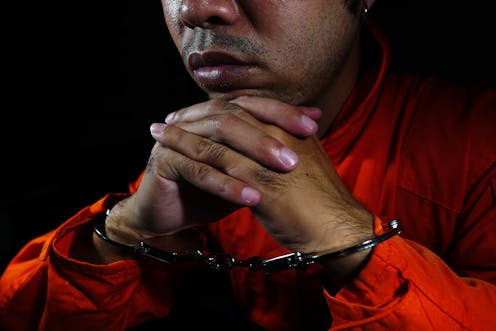
Innovative thinking has caught on in criminology. This is a welcome paradigm shift from the largely punitive mindset in the world of corrections across the world.
This is particularly important in South Africa which has one of the highest rates of convicted criminals reoffending (recidivism) in the world – as high as 90%. South Africa also has the highest rate of imprisonment in Africa. As a result, the Department of Correctional Services has a tough task “rehabilitating” the 160 000 inmates in its care.
Two innovative ideas would be worth pursuing to reduce the rate of prisoners reoffending. Both are explored in my own research. The interventions are firstly, the introduction of companion animals in prisons and, secondly, encouraging offenders to write reflective autobiographies during incarceration.
Both approaches have been used in other countries. In the US and Scotland companion pets have been introduced to jails with remarkably good outcomes while in China, which has one of the lowest recidivism rates in the world, the tradition of asking inmates to write reflective autobiographies goes back a long way.
The well-being of offenders and ex-offenders is paramount in preparing them for release into a harsh, stigmatising shaming society, as is the case in South Africa. Under present conditions, offenders rehabilitate, if they do, despite, not because, of the prison.
Companion animals
Neuro-science researchers have found that oxytocin, a nurturing hormone, is released in humans after physical contact with animals. Its release calms people and also leads to the need for attachment to other people.
It’s therefore not surprising that the evidence shows that pets can make a big difference in various therapeutic ways. Companion animals, notably horses and dolphins, have been shown to help people heal, to recover from trauma and to manage extreme stress. A study found that feral cats entering and leaving a mental health centre through open windows has had a demonstrably beneficial therapeutic effect on the patients.
Another example is animal assisted therapy which is considered to help people build secure emotional attachments.
These examples show that companion animals can make a valuable contribution to providing friendship and emotional well being.
In prisons, pets could help contribute to the well-being of offenders suffering from loneliness and loss of meaning. The knock-on effect could be better relationships with peers and staff.
Some prisons in the US and Scotland have tried this approach. A survey of Scottish prisons in the late 1990s by prison researchers Mary Whyam and Liz Ormerod led to make a convincing case for the introduction of companion animals, especially cats and pigeons, in prisons. It was found that taking care of animals improved the self-esteem of offenders. And that working with animals enhanced offenders’ interpersonal skills such as empathy, patience, compassion and responsibility.
Research in US correctional facilities suggests that the rates of recidivism were significantly lower among offenders who were exposed to animals than those that weren’t.
The power of autobiography
Another useful intervention would be to encourage offenders to reflect on and write about their lives. This has been shown to be very productive in China which has a well established practice of requiring offenders to write fully fledged autobiographies as proof of their rehabilitative progress.
Incarceration serves as a valuable space in which offenders could reflect critically about their lives. Pu Yi, China’s puppet emperor during the Japanese occupation, reflected in his own published autobiography that all prisoners were expected to write lengthy, deeply reflective pieces in an attempt to grasp how and why they came to be in prison.
China has one of the lowest recidivism rates in the world – between 6-8%.
According to James Pennebaker, a leading authority on expressive writing:
I think of expressive writing as a life course correction. The idea is getting people to come to terms with who they are, where they want to go.
As an incentive to subscribe to autobiographical writing offenders could be offered a six month remission in their sentences on completing the project.
Final thoughts
Punishment is outdated in an enlightened era where, in the field of human behaviour, positive reinforcement shows that there are far more productive ways to achieve desired outcomes.
Marginalisation, stigmatisation and discrimination of offenders and ex-offenders in South Africa’s harsh shaming culture feed into very high, unsustainable rates of recidivism.
Despite the danger posed by reformist initiatives, well-being as a reformist intervention presents an opportunity to change patterns of ex-offenders being stigmatised, and manage recidivism more effectively. Introducing companion animals to South African prisons and encouraging offenders to write reflective autobiographies while in prison are two great ideas that could contribute to their well-being in a cost effective way.

Casper Lӧtter does not work for, consult, own shares in or receive funding from any company or organisation that would benefit from this article, and has disclosed no relevant affiliations beyond their academic appointment.
Source: The Conversation – Articles (AFRICA)
Read more on The Conversation.
Join the fun: Add Your event | Submit a Press Release | Add your listing.


