Some smart ideas to make toilets fit for purpose in Africa’s cities:
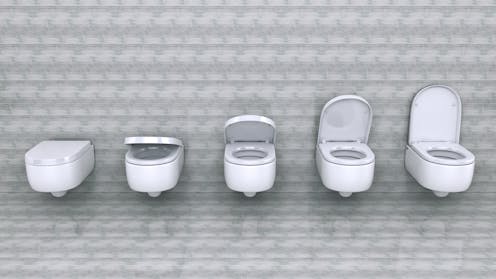
About 23% of people living in Sub-Saharan Africa don’t have access to toilets while 31% with toilets use one’s that aren’t connected to a formal sanitation system. This means that more than half the people in sub-Saharan Africa live without proper sanitation – that’s about 570 million people.
One of the problems is that existing toilets aren’t a good fit for parts of sub-Saharan Africa because many areas lack water and there are often no proper plumbing or facilities to treat wastewater.
But there are solutions – toilets that are designed differently. We have come up with some innovative designs overcome the two biggest challenges – excessive use of water, and the fact that urine and faeces aren’t considered as resources.
The designs we suggest have a number of key features. Primarily, they use no water and store and treat urine and faeces separately. They include innovative technologies that reduce water and energy consumption – both vital steps if we’re going to start building smarter, greener cities.
Problems with current designs
Every flush by a typical toilet sends about six to 16 litres of fresh water to wastewater treatment centres. That’s a lot of water. The average total water consumption per person in Africa is about 20 litres a day.
On top of this, the treatment of waste uses up a huge amount of energy – about three to 15 kWh. This energy is being used to provide fresh water from different sources – like dams – for the flushing process and to treat the produced wastewater. It’s a huge amount of energy given the fact that we need only about 2kWh to charge a smart phone over a whole year.
The process of treating wastewater, so that it can be recycled and reused, is expensive because urine and faeces are mixed at the source. This makes treatment lengthy, expensive and power intensive. It’s also bad because there are valuable elements in human waste – like nitrogen and phosphorous – that aren’t being extracted and reused.
The cost of a more innovative toilet system can be higher than others – like pit latrines – but it really depends on the raw construction materials like concrete and wood. Tanks and other parts can also be made through locally available materials – like jerrycans. But once it’s built, the operation and maintenance process is easy and can be done by local labours.
New ideas
Separate waste: Our main idea, when it comes to improving toilets, is to view urine and faeces as a resource instead of waste. Nutrients from human waste – which can be used as a fertiliser to grow crops – can be removed during the treatment process through better management and technology.
To take advantage of this, the urine must be separated from the faeces. There are many toilets around the world that already do this. In some Asian countries, like Korea, Japan and Vietnam, it’s a traditional mechanism.
These toilets look similar to normal ones but there are two different inlets that store the waste in different tanks. Here they can be treated to remove smell and increase their fertility.
It’s a highly efficient process which doesn’t need complicated infrastructure and reduces the time needed for the treatment of waste. The system saves a huge amount of water and energy, which is beneficial to many local governments that are already under pressure.
Waterless: For most existing toilets, water is essential for flushing and draining. But it’s possible to have a waterless toilet. Again, the toilet must collect the urine separately from the faeces. Instead of flushing, the faeces and urine are separated from the source using urine-diverting dry toilets. These toilets are available in both sitting or squatting models and take advantage of the anatomy of the human body, which excretes urine and faeces separately. The urine is kept separate and drained via a basin with a small hole near the front of the toilet bowl or squatting pan, while faeces fall through a larger drop-hole at the rear.
Enhance waste: When waste is separated and collected into tanks, microbes can be added to them which ‘nitrify’ the waste – making it a better fertiliser – and control any bad smells from the toilet.
Community support: If these toilets are used communally they can bring huge social and economic benefits for communities. While common toilet systems are expensive to maintain, and pit latrines can be public health hazards, these systems are safe and can provide an excellent source of fertiliser for groups that grow their own food, or produce food for markets.
As African cities grow and develop, and pressure on natural resources and infrastructure – like sewerage – increase, these systems offer a sustainable and more hygienic way forward.

Mooyoung Han receives funding from Korea Research Foundation. He is affiliated with Water and Sanitation Appropriate Technology(WASAT) center at Seoul National University.
Shervin Hashemi is affiliated with Department of Civil and Environmental Engineering, Seoul National University.
Source: The Conversation – Articles (AFRICA)
Read more on The Conversation.
Join the fun: Add Your event | Submit a Press Release | Add your listing.


