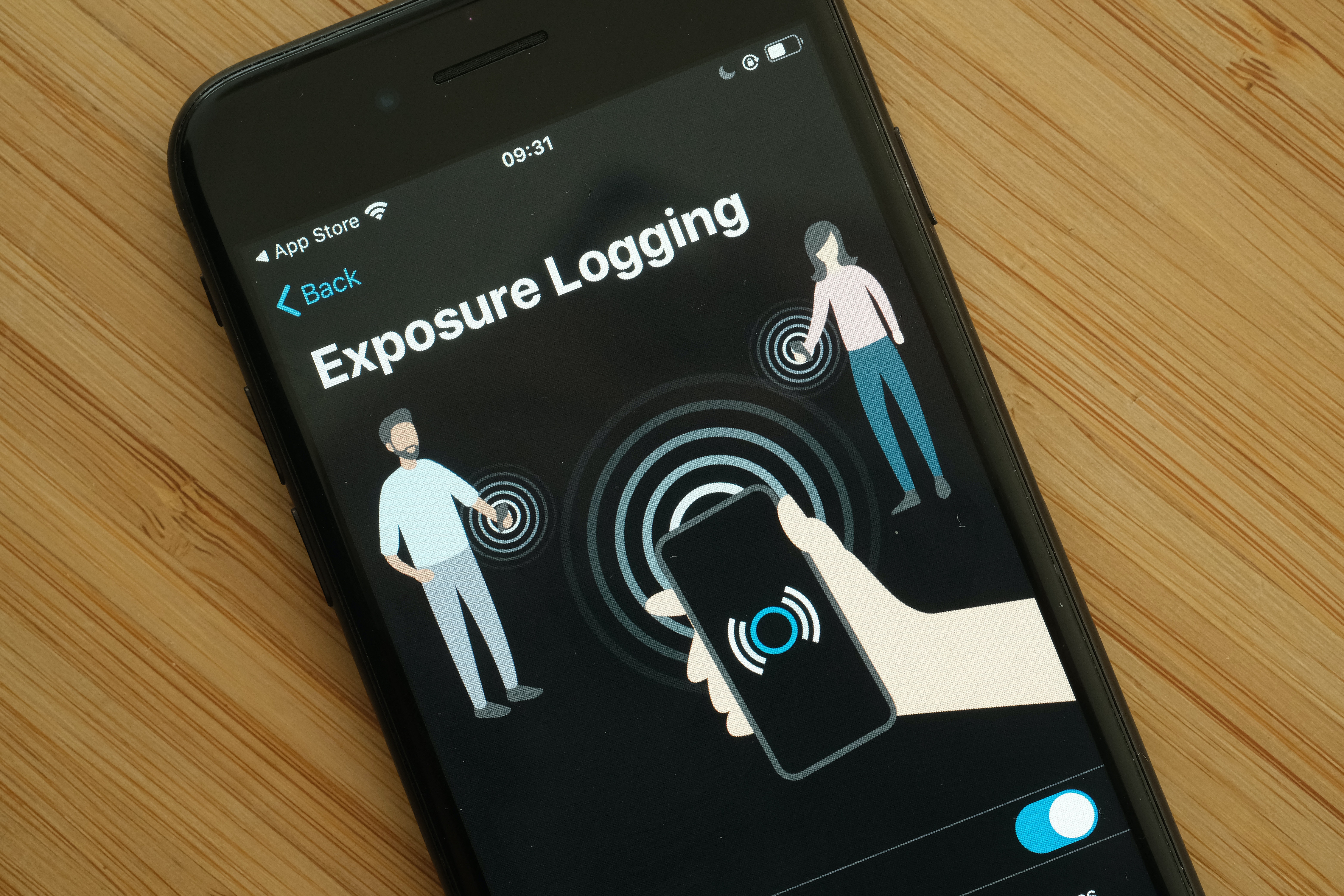
The most effective way to stop the spread of a virus is to prevent contact with everyone who is infected. Those who are infected can be isolated and treated if necessary. To determine who they are, it’s necessary to actively look for and manage cases.
During the COVID-19 pandemic, emerging technologies are being repurposed to help trace whoever has been in contact with an infected person.
Some of these technologies, such as the Global Positioning System (GPS), wi-fi and Bluetooth, are not new. GPS has been used to find accident victims at precise geographic locations. Some of the uses of wi-fi are oxygen monitoring devices, smart beds, access to electronic medical records and real-time access to X-rays and magnetic resonance imaging scans.
Now these tools can also help do one of the most important jobs in the pandemic: track and trace. They allow people some movement and economic activity, with the ability to manage their own risk of being exposed to possible infection or spreading any infection.
The South African government recently introduced a mobile application, COVID Alert SA, to help people notify their close contacts if they are infected.
The app is based on smartphone technology enabled by readily available functions developed by Apple or the Google Exposure Notification System. It uses a phone’s signal to generate a random code. The code is then exchanged with other users of the same app within a two metre radius. These codes are stored on the respective devices for two weeks.
People testing positive for COVID-19 in these two weeks can anonymously alert others by simply clicking a button.
The exchanged and saved codes will, when activated this way, locate and match each other and alert whoever the infected person has been in contact with. This information will allow people to test for COVID-19 and isolate, if necessary, to prevent further infections.
But there are concerns about accuracy, privacy and integration across regions. Questions have also been raised about whether the uptake will be sufficient for the app to function as intended.
In a recent analysis my colleagues and I looked at the legal and ethical aspects of tracing people who might have been in contact with an infected person. Our analysis may provide useful insights when deciding whether to use the app, and help people understand tracking and tracing principles in general.
Key concerns
The first concern is accuracy of the technology. This matters because people’s freedom of movement and ability to go to work or attend school will be affected by an alert.
Cell tower metadata are supplied by electronic communication service providers. The data rely on signal strength and delay times to triangulate the position of a cellular phone. This method often provides inaccurate information because signals are scattered by buildings. There aren’t many towers in rural areas in South Africa, so triangulation may not even be possible there. There’s also a concern that the app might not detect other nearby smartphones accurately.
But there’s no evidence to suggest that the app is not working.
Second, there’s the issue of privacy. The invasive nature of tracking, tracing and surveillance is a real concern.
Before introducing the app, South Africa established a tracing database to serve the same purpose as the current app. The database collected names, identity and cellphone numbers, and the results of people who tested for COVID-19 and their known or suspected contacts. The database had the potential to greatly assist with contact tracing. But it immediately infringed upon the constitutional right to privacy.
To deal with this, the new COVID alert app does not record a person’s geolocation, or any personal or health information. It only uses the location to determine how close another person was and for how long. Even the randomly generated codes cannot be linked to the phone user’s identity. No personal information is recorded or stored anywhere. Hence no privacy rights are at risk of being infringed.
A UK study found that people were more concerned about who was in charge of tracing than they were about their information being stolen. The majority preferred that a health organisation, as opposed to the government, collect and process information. The COVID Alert SA app is officially owned and managed by the South African government.
People also preferred a combination of technology and an old-fashioned human approach to contact tracing.
Public distrust is one of the problems affecting the contact tracing drive in the US. Another is discrepancies in data from different states.
A number of European countries have launched contact tracing apps also using the Google-Apple standard like South Africa. France and Hungary launched different types of apps which will make inter-operability and subsequent tracing across countries in Europe increasingly difficult.
The UK has only very recently joined the countries using the Apple and Google model.
Similarly to the UK and during the early days of the pandemic, China managed to contain the spread of the virus by manual tracing and rapid isolation of positive cases. Now, scientists are calling for technology-based measures to make a long-term response possible.
The winning strategy came from South Korea, whose comprehensive testing and contact tracing was so effective that the country never had to impose a strict lockdown. South Korea used a combination of face-to-face and digital geolocation tracing. It was criticised for infringing on privacy, however. Other countries were more sensitive towards privacy rights.
Effective tool
Digital contact tracing apps can be designed to protect privacy rights and to work across borders.
Research models have found that the more people use these apps, the more transmission of the disease can be reduced and the more scope there is to ease quarantine measures. But the models have also found that the apps are effective even at low uptake levels.
For purposes of managing a pandemic these apps have been tried and tested and evolved to the point where they can do more good than harm if used on a large scale.


