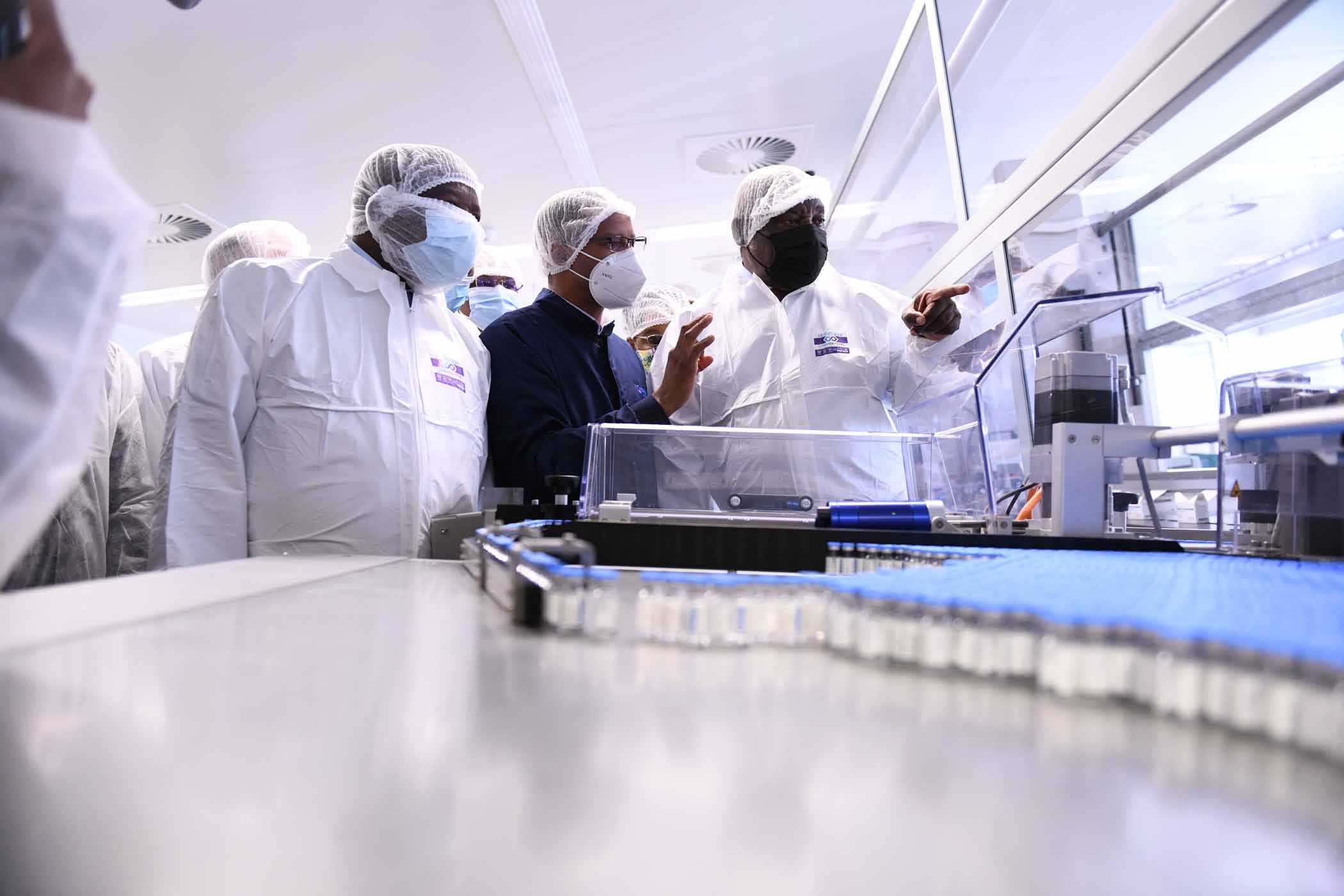
It’s unlikely that vaccine manufacturing will offer Africa a quick fix for COVID-19. Countries on the continent are grappling with a diverse array of challenges. These include vaccine hesitancy, supply bottlenecks and a lack of operational funding and human resources to administer jabs.
Still, the political will to boost local manufacturing of vaccines is rising across the globe, including in Africa – and has never been this high.
The reason is simple. COVID-19 has shown that regions and countries take care of their own people first when crises hit. Africa wants to be able to do the same. To do so, the continent must seize new opportunities to fast-track the development of vaccine manufacturing capacity and to boost regulatory processes.
In 2020, about 40 African countries participated in a World Health Organisation (WHO) training marathon to build manufacturing capacity. All 54 countries on the continent also supported Ethiopia’s recently passed resolution to the 74th World Health Assembly, focused on strengthening local production of medicine and health technology. At the recent G20 Global Health Summit, the European Commission also announced a new initiative on manufacturing in Africa, backed by €1 billion.
Read more: TRIPS waiver: US support is a major step but no guarantee of COVID-19 vaccine equity
That’s critical because manufacturing vaccine doesn’t come cheap. Success will depend heavily on support – in cash and in kind – from developed countries. It takes hundreds of millions of dollars to produce a new vaccine.
There is hope for relaxation of intellectual property rights. These are necessary to open the way to local manufacturing of existing vaccines.
But the production process for new vaccines can take as long as five to 10 years. The typical vaccine roadmap begins with exploratory research, followed by pre-clinical and clinical safety and efficacy testing on animals and humans – and regulatory reviews and approvals for licensing. Only then can the manufacturing process begin.
This requires a significant body of skills. Local expertise in areas such as research and development, regulatory expertise and quality assurance must be strengthened too.
Local manufacturing
It will take several more years before countries are fully prepared to manufacture new vaccines to the scale of contributing significantly to global output. Therefore, governments should adopt a longer-term view that prioritises the most urgent health challenges in the region. This vision must be about manufacturing vaccine generally, rather than COVID-19 vaccines specifically.
Africa has 54 countries and 1.2 billion people, but produces only 1% of all the vaccines it administers. The continent also faces a heavy burden of disease. Over 90% of the world’s malaria deaths and 70% of all people living with HIV are in Africa.
So far, the continent has only a few producers of vaccines. Statutes signed between the government of Senegal and the Institut Pasteur in 2009 allowed the country to manufacture yellow fever vaccines. There are six other vaccine manufacturing institutes. One is VACSERA in Egypt, the oldest vaccine manufacturer in Africa. Egypt is slated to complete the production of 40 million doses of China’s Sinovac COVID-19 vaccine domestically by the end of 2021. In South Africa, the pharmaceutical company Aspen will be manufacturing doses of the Johnson & Johnson COVID-19 vaccine under licence.
Read more: Vaccine production in South Africa: how an industry in its infancy can be developed
Most local companies engage only in packaging and labelling, and occasionally fill-and-finish steps. But it’s noteworthy that there are about 80 sterile injectables facilities on the continent. These produce a broad range of fill-and-finish sterile solutions and emulsions including anaesthetics, eye drops and multi-drug resistant tuberculosis vaccines. Significant financial commitment would be required to transform them into fully integrated manufacturing facilities. But these operations have built solid track records with partners and suppliers that will benefit expansion plans.
Integrating policies
Africa’s segmented markets, and often small economies, are at odds with the fact that vaccines are mostly produced in large quantities to keep prices down. They require large markets for sustainability. Regulatory bodies that meet international standards are also lacking, presenting a further hurdle.
Integrating national and regional policies and strategies would in effect increase the size of the overall market. All countries could then benefit, regardless of the size of their economy.
More integration will drive agreement on the manufacturing of products in high demand in Africa. It will also expand market access, and help avoid costly duplication. But most importantly, it will help ensure sustainability because most African countries’ markets are too small to support their own manufacturing.
African countries must make better use of regional economic integration platforms such as the Economic Community of West African States, the Common Market for Eastern and Southern Africa, and the new African Continental Free Trade Agreement, all of which offer great opportunities.
Read more: Africa’s free trade area offers great promise. But only if risks are managed with resolve
The African Continental Free Trade Area, for example, aims to reduce all trade costs – it will eliminate 90% of tariffs – and enable Africa to integrate further into global supply chains. Cutting red tape and simplifying customs procedures will bring significant income gains.
Strong regulatory capacity and oversight is another building block for vaccine production and product safety. Countries must strengthen their regulatory systems to ensure that all medical products are of the highest quality, and that local manufacturers maintain international standards. This is why it’s critical for member states to urgently ratify the treaty to support the creation of the African Medicines Agency. To date, seven of the required 15 African Union member states have ratified the treaty.
The World Health Organisation, where I am the regional advisor for vaccine research and regulation in the Africa region, works with member states and partners towards local vaccine manufacture.
In Ethiopia, for example, we are working closely with the Ministry of Health. We’re conducting a feasibility study in respect of the potential for high-standard manufacturing of vaccines. We’re also developing cost estimates for a road map to success.
Ethiopia, home to the second biggest population on the continent, had to pay a hefty US$707 million to procure routine vaccines between 2016 to 2020. That’s an enormous financial burden and sends a very clear message about the urgency for local manufacturing.
Looking forward
Africa is facing delays in accessing life-saving vaccines for COVID-19. The continent may experience similar delays in the future. The continent faces significant and enduring public health threats, including measles, rotavirus, yellow fever and Ebola.
To manage these public health threats, Africa needs its own capacity for vaccine development and production so that it can immunise for childhood diseases and help control outbreaks of highly infectious diseases – including COVID-19.


