Why Kenya has banned the commercial slaughter of donkeys:
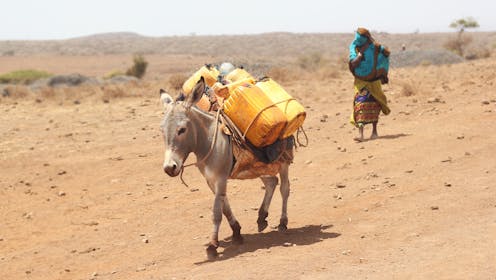
Kenya has banned the commercial slaughter of donkeys. The trade in donkey meat and hide was legalised in 2012, but a report last year warned that the rise of donkey slaughterhouses in Kenya could wipe out all the animals in the country by 2023. Moina Spooner from The Conversation Africa asked Monicah Maichomo to shed more light on the impact of the trade.
What is driving the sudden rise in demand for donkey meat and skins?
The global demand for donkey skins and meat is mostly driven by Chinese markets. In China donkey meat and skins are used to produce snacks, beauty products, sex stimulants, anti-ageing products and traditional medicine known as ejiao.
Ejiao is what’s driving demand the most. It consists of gelatin that is extracted from boiled donkey hides. It’s claimed to strengthen blood and generally boost health and vitality. Ejiao has a long tradition in traditional Chinese medicine but previously only the elite in society could afford it. Over the past 30 years, a much larger section of the Chinese population has been able to afford it, driving demand.
Local markets in China can’t keep up, so Chinese businesses turned to other sources. Kenya was a good source of donkeys – it had about 1.8 million in 2010. And under law they are considered a food animal like pigs and cows.
To meet the demand, four export slaughterhouses were licensed and started operating in 2016. These abattoirs had the capacity to slaughter 1,260 donkeys a day. Donkeys are sourced from donkey keepers, others are stolen and some are even brought in (legally and illegally) from Ethiopia to meet the demand.
There are currently no donkey farms in Kenya that have the capacity to supply the slaughterhouses.
What impact is this having and where is it being felt?
The high demand for donkeys has significantly increased their prices, made them hard to find and led to many incidents of donkey theft. The average price of an adult donkey has, in two years, gone up from Ksh4,000 to Ksh13,000.
Donkeys are also at risk of going extinct in the country. My colleagues and I recently conducted a survey which found that donkeys were being slaughtered at five times the natural reproduction rate. A total of 301,977 donkeys, representing 15% of the donkey population, were slaughtered in four export slaughterhouses between April 2016 and December 2018. Holding all factors constant, we projected that by 2023 there wouldn’t be any donkeys left.
This would be a huge blow to many households in Kenya. Poor households depend a lot on working donkeys and have suffered as a result of their scarcity. The households most affected are found in rural Kenya and earn their living from farming.
Donkeys offer crucial services for families that can’t afford motorised transport. They procide transport to markets, particularly in remote areas with poor infrastructure. They carry farm produce, people and fodder for other livestock. On a daily basis they’re used to fetch water and firewood.
Losing a donkey could mean a child has to help with household chores and can’t go to school. If a household doesn’t own a donkey, it needs to hire one or people have to take on the tasks. It costs more in terms of both time and money.
Kenya has banned the commercial slaughter of donkeys, for now. What can be done to ensure the system is more sustainable if it’s reintroduced in the future?
The ban will allow donkey numbers to grow again. If it were reintroduced in the future – to ensure a steady, sustainable supply – abattoirs should enter into contracts with donkey farmers. Pregnant donkeys should also be excluded from slaughter. At the moment about 27% of females slaughtered are pregnant, disrupting the reproduction rate.
There should also be a focus on donkey breeding research to increase the number and size of donkeys produced. The predominant breeds are descendants and crosses of the Nubian wild ass and the Somali wild ass. Larger breeds could provide more skin and meat.
Kenya could regulate the trade more carefully. Other countries in Africa have managed to do this successfully. Ethiopia, for instance, banned the country’s first donkey abattoir from operating, after a public outcry. The government is now looking at more sustainable ways of farming donkeys.

This study was financed by Brooke EA – an international animal welfare charity dedicated to improving the lives of working horses, donkeys and mules.
Source: The Conversation – Articles (AFRICA)
Read more on The Conversation.
Join the fun: Add Your event | Submit a Press Release | Add your listing.


