Why knowing what black mamba venom does to the human body is crucial:
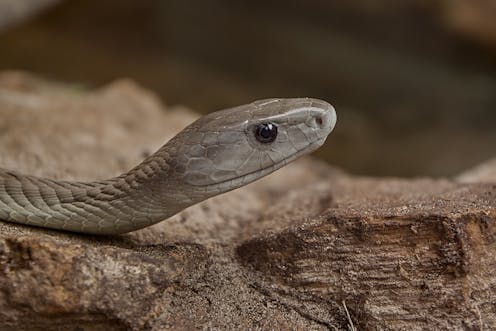
Black mambas are extremely dangerous reptiles – in fact, many consider the species to be one of the world’s deadliest snakes. They are found in southern and eastern Africa, and are shy, evasive creatures. They won’t seek out human interaction. But if cornered or confronted, they will strike. And their venom is lethal.
Black mambas (don’t let the name fool you – they’re very rarely black, and are more usually a dark brown – it is the inside of the mouth which is black) probably cause the largest number of snake-related deaths in southern Africa. In a recent case, a South African judge died after being bitten by a black mamba while he was travelling in Zambia. But the data for the whole continent is limited, so the precise number isn’t known. This is chiefly because most of these deaths occur in rural parts of Africa with limited health infrastructure and other resources.
Sub-optimal mortuary facilities, inadequate professional manpower, poorly developed protocols and the lack of an efficient and reliable toxicology service means many of these deaths in Africa’s more rural areas are not properly diagnosed. It is most likely that these snakebite victims get buried without a thorough forensic pathological autopsy.
The black mamba is born with two to three drops of venom per fang. It is a front-fanged snake, with fangs up to 6.5 mm in length, located at the front of the upper jaw. An adult of the species has between 12 and 20 drops per fang. It takes just two drops of venom to kill an adult human. This means that even young black mambas are extremely dangerous.
Not much is known about the pathology of trauma of black mamba bites – that is, what the black mamba’s toxin does, physically, inside a victim’s system. We do know that the venom is neurotoxic and cardiotoxic. That means that it has a direct effect on the nerves and the heart.
The more we know, the better. If we know precisely what the toxin does, hospitals and clinics might be better prepared to treat those who’ve been bitten.
A recent case study
Recently my colleagues and I examined the case of a young man who was bitten by a black mamba in South Africa. He arrived at the hospital 20 minutes after being bitten and had already suffered cardiac arrest with accompanying hypoxic brain injury.
This was my third encounter with the victim of a black mamba bite. My first fatal encounter, in 2000, involved a 12-year-old girl who was bitten on the thigh by a black mamba. The second involved a British tourist who was accidentally bitten at a snake park, and who also died.
In this latest case, the co-workers of the young man who died were certain that the snake was a black mamba. This gave us, as forensic pathologists, an excellent opportunity to thoroughly investigate this matter. Oftentimes, the history is scant, with victims unable to properly identify the snake which bit them.
The forensic examination consists of a thorough macroscopic post mortem examination, followed by histological (microscopic) examination and blood tests.
A black mamba’s venom is complex. It interferes with transmission across the motor end-plate, which is where the nerves and muscles connect, so it will result in paralysis. The venom is also cardiotoxic, which means it may have a direct effect on the heart.
How to treat it
So what should you do if you or someone around you is bitten by a black mamba?
The first priority is to transport the victim to an appropriate medical facility as soon as possible. First-aid should focus on maintaining vital functions, such as respiratory support. Keep the victim still and try limit any unnecessary movement. Remove constricting items (for example rings and clothing), especially those close to the bite site.
The first-aid treatment of black mamba bites includes lymphatic retardation with the pressure immobilisation technique – in other words try and wrap a tight crepe bandage or tourniquet close to the bite site.
Medical management comprises continuous monitoring, making sure the airways are open, treating symptoms and the immediate administration of antivenom. The antivenom is injected intravenously because absorption is poor via the muscles. It’s also important not to inject into or around the bite site. In rare instances the victim may be put on extracorporeal membrane oxygenation, which is a way of providing prolonged cardiac and respiratory support to those whose heart and lungs are unable to provide oxygen to the body.
This combination of respiratory support and antivenom may save a person’s life. Over time, the antivenom will ease muscle paralysis and set the victim on the road to recovery.

Ryan Blumenthal does not work for, consult, own shares in or receive funding from any company or organisation that would benefit from this article, and has disclosed no relevant affiliations beyond their academic appointment.
Source: The Conversation – Articles (AFRICA)
Read more on The Conversation.
Join the fun: Add Your event | Submit a Press Release | Add your listing.


